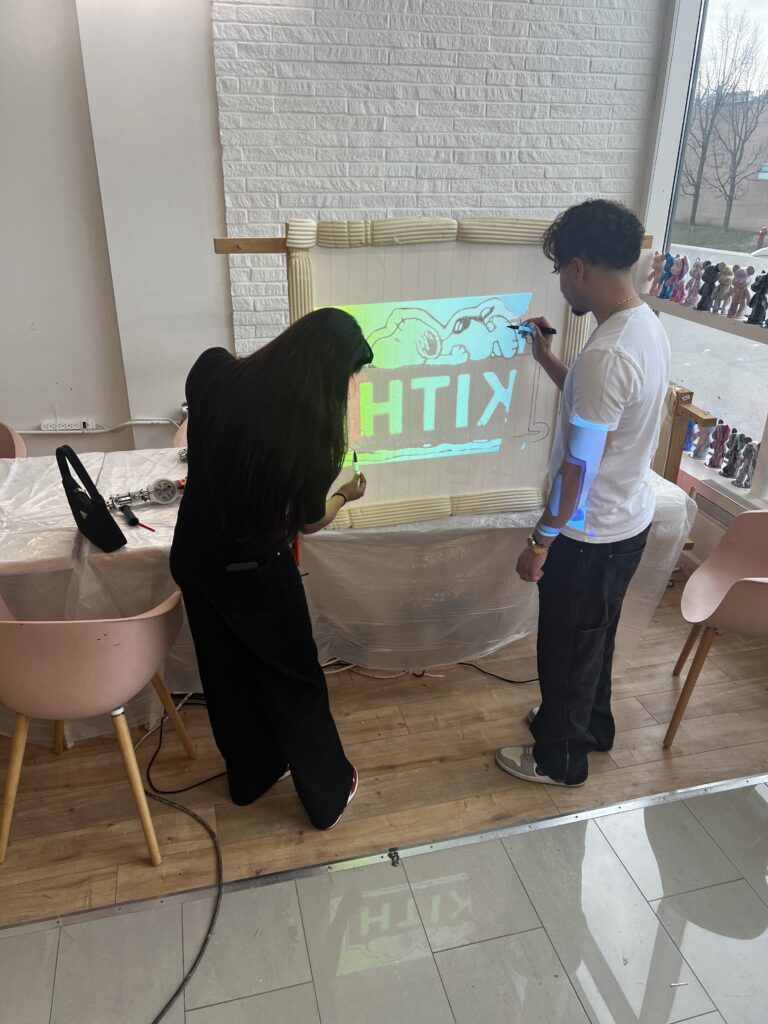
If you’ve booked a rug tufting class and you’re standing in front of your closet wondering what to put on, the short answer is simple: wear comfortable, fitted clothes, closed-toe shoes, and tie long hair back.
That’s the core rule. But the reasons behind it, and a handful of small choices about fabric, sleeves, layers and shoes, decide whether you spend the session focused on your design or picking yarn off your sweater and worrying about a loose cuff near a moving machine.
This guide goes through everything in detail: what to wear head to toe, which fabrics work and which don’t, what to avoid, what to bring, how to dress for each season in Toronto, what to wear for a date, a birthday, a team outing or a solo class, what to do after the session, and how this compares with other workshops. It’s written for first-timers.


The quick checklist
Rug tufting is a hands-on craft, but it isn’t like painting or pottery. You use a tufting gun, a handheld machine that pushes yarn through a cloth stretched on a frame. The gun moves, makes a steady buzzing sound, and works close to your hands and body.
That affects what you should wear in four ways:
Safety. Loose sleeves, scarves, long hair and dangling jewelry can get in the way of a moving machine. The simplest fix is to wear things that stay put. You never need to think about it again once you’re dressed properly.
Comfort over a long session. Classes run anywhere from about two to six hours depending on the size of your rug. You’ll be working at the frame for much of that time, leaning, reaching and looking down at your design. Clothes that feel fine for ten minutes can feel very different after three hours.
Fibres. Yarn sheds tiny fibres as it’s cut and trimmed, and they cling to some fabrics far more than others. Choosing the right material keeps you tidier, both during the class and on the way home.
Focus. When you’re not worried about your sleeve, your hair, or your shoes, you can focus on what you came to do: make a rug you’ll want to keep.
At ZuoZuo Studio in North York, the safety guidance is straightforward: wear closed-toe shoes, tie back long hair, and follow your instructor’s guidance on handling the gun at all times. The rest of this guide builds on those three rules.
This is the one rule that matters most. Wear closed-toe shoes. Tufting involves a machine, yarn and tools, and you want your feet covered in case anything drops.
| Shoe type | Verdict | Why |
|---|---|---|
| Sneakers or trainers | Best choice | Flat, supportive and covered |
| Flat closed shoes or flats | Good | Covered, and fine for a long session |
| Flat ankle boots | Good | Fine if they’re comfortable and the sole is flat |
| Canvas shoes | Good | Light and breathable in summer |
| Heels and platforms | Avoid | Hard to stand in for hours, and unstable |
| Sandals, slides, flip-flops | Not allowed | Toes are exposed |
| Open-toe flats | Not allowed | Toes are exposed |
| Slippery-soled dress shoes | Avoid | Less grip while you move around the frame |
If you’re travelling in rain or snow, bring a dry pair in your bag. Sitting through a long session in wet boots is miserable.
If your hair is past your shoulders, tie it back before you start. A ponytail, braid or bun all work. Hair can fall forward while you look down at the design, and you don’t want it near the gun or tangled in yarn.
| Hair length | What to do |
|---|---|
| Long (past shoulders) | Ponytail, braid or low bun. Pin loose strands |
| Medium (chin to shoulder) | Low ponytail or clip. Use a headband for the front |
| Short with bangs | A headband or small clips to keep bangs out of your eyes |
| Very short | Nothing needed |
Carry a spare hair tie. They snap, and a clip is useful for flyaways.
The rule is simple: nothing loose near the machine.
Good choices:
Avoid:
If you’re wearing a hoodie, tuck the drawstrings in or choose one without them. A top with a neckline that stays put when you lean forward is also worth choosing, since you’ll be leaning toward the frame.
You’ll be standing, shifting, reaching and leaning, so choose bottoms that let you move.
Good choices:
Avoid:
Yarn sheds small fibres, and those fibres cling to fuzzy, knitted or fleece fabrics. Smooth, tightly woven fabrics are easier to brush clean afterwards.
| Fabric | Fibre pick-up | Notes |
|---|---|---|
| Denim | Low | Hides fibres well, and durable |
| Tightly woven cotton | Low | Easy to brush off |
| Athletic or performance fabric | Low | Smooth and breathable |
| Cotton jersey (t-shirt) | Medium | Fine, brush off afterwards |
| Fleece | High | Holds fibres. Avoid if you can |
| Chunky knit or wool sweater | High | Catches yarn and collects fibres |
| Velvet or corduroy | High | Holds fibres, hard to clean |
| Mohair, angora, fuzzy knits | Very high | Avoid |
A practical tip: colour matters too. If you’re working with light yarn, you’ll see fibres on dark clothes. If you’re working with dark yarn, you’ll see them on light clothes. Mid-tones, denim and patterns hide fibres best.
This is general practical guidance, not a studio rule. If you’re unsure about a particular piece, choose the simpler option.
Leave behind:
A watch, a small stud earring or a simple band is fine. If you’re not sure, take it off and put it in your bag. You can put it back on afterwards.
Knowing how the session runs makes it easier to plan. At ZuoZuo, a typical session follows these steps:
Here’s how that connects to clothing:
| Stage | What you’re doing | Clothing that helps |
|---|---|---|
| Design | Standing or sitting, sketching or tracing | Anything comfortable |
| Learning the gun | Listening, then first practice | Fitted sleeves, hair tied back, closed-toe shoes |
| Tufting | Leaning toward the frame, holding the gun steadily | Flexible bottoms, no loose sleeves, no dangling jewelry |
| Trimming | Fibres are cut and fly | Smooth fabric, mid-tone colours |
| Finishing | Glue and trimming handled by the studio | Nothing special |
Smaller pieces can be finished in under two hours. Larger or more detailed designs may take several hours or need a second visit. The studio’s published range is about 2 to 6 hours, so plan your day accordingly and wear something you can stay comfortable in for the whole time.
You don’t need to bring materials. At ZuoZuo, the tufting frame with monk’s cloth already stretched, a selection of yarn colours, use of a professional tufting gun, instructor guidance and finishing (gluing and trimming) are handled for you.
A small bag with these makes the day easier:
Leave at home: large bags, delicate items, and anything you’d hate to get fibres on.
Toronto weather swings a lot, and your commute matters as much as the class.
Dress the way you would for a relaxed, active date: comfortable, a little put-together, and practical. Skip heels, flowing sleeves and anything delicate. A fitted top in a mid-tone hides fibres and looks good in photos. If you want to match, choose similar colours, not identical loose outfits.
If you’re booking as a couple, see our guide to the best couples workshops in Toronto.
Casual and comfortable. If your group wants a theme, matching tees or one shared colour look good in photos, as long as the sleeves are fitted. Bring a bag for the birthday guest’s gifts and cards so they stay away from the frames. See our adult birthday party ideas for more.
Business casual, adapted for the activity: closed-toe shoes, fitted sleeves and nothing you’d mind getting a few fibres on. If you’re coming straight from work, bring a change of top and leave blazers, ties and lanyards in your bag. See our guide to team building activities in Toronto.
Wear what makes you comfortable. You’ll be focused on the design, so you’ll want to feel at ease for a few hours.
Supervision is recommended for younger participants, so check age guidance with the studio when you book. Dress children in snug sleeves, closed-toe shoes and tied-back hair, just like adults.
If you’re buying the class as a gift, tell the recipient what to wear when you give it. Gift cards are available for any workshop size and can be purchased directly through the studio. See our guide to experience gifts in Toronto.
If you’d rather copy an outfit than build one, these all work.
| Situation | Outfit |
|---|---|
| Cold day, long session | Fitted long-sleeved tee, jeans, sneakers, hoodie in your bag |
| Warm day | Cotton tee, shorts or light pants, canvas sneakers |
| Date | Fitted mid-tone top, dark jeans, clean sneakers, hair in a low ponytail |
| After work | Change into a tee and leggings at the studio, flat shoes, blazer left in your bag |
| Group of friends | Matching coloured tees with fitted sleeves, jeans, sneakers |
| Rainy day | Fitted top, jeans, waterproof sneakers, spare dry socks in your bag |
| Long hair, long session | Braid, fitted top with sleeves you can push up, comfortable pants, sneakers |
If you do turn up in the wrong thing, tell your instructor. A quick fix, like pushing up a sleeve, pinning your hair back or taking off a necklace, usually solves it.
If you’re planning to try other workshops, here’s how the dress codes compare.
| Workshop | What to wear | Notes |
|---|---|---|
| Rug tufting | Closed-toe shoes, tied-back hair, fitted sleeves | Moving machine, fibres from yarn |
| Fluid bear painting | Clothes you don’t mind getting paint on | The studio’s page says the session includes an apron and gloves |
| Pearl jewelry | Comfortable everyday clothes | No special clothing needed |
Only the rug tufting class needs the closed-toe, tied-back-hair, fitted-sleeve combination. Ask the studio about any specific guidance for the other classes when you book.
ZuoZuo Studio runs beginner-friendly rug tufting classes in North York. No experience is needed, and an instructor guides you throughout.
See our full rug tufting class in Toronto page to book, or read more about rug tufting class costs in Toronto.
New to tufting? These guides help:
Wear comfortable, fitted clothes, closed-toe shoes, and tie long hair back. Avoid loose sleeves, dangling jewelry and open-toe shoes.
Yes. Closed-toe shoes are required at ZuoZuo Studio. Sneakers or flat, closed shoes are best.
Ready to try it? Book a rug tufting class at ZuoZuo Studio in North York. Beginner-friendly, from $110, and no experience needed.