Tufting Gun: Everything You Need to Know About Rug Tufting Guns in 2026
Imagine this: you’re cozied up in a Toronto studio, a tufting gun humming in your hands, transforming colorful yarn into a plush rug that’s all you. That’s the magic of the tufting gun, a tool that’s turned rug making from an ancient craft into a modern obsession. Whether you’re eyeing a shaggy mat for your condo or a quirky wall hanging for your office, the rug tufting gun makes it happen—fast, fun, and forgiving. As someone who’s spent five years elbow-deep in fiber arts—teaching tufting workshops, testing countless tufting guns, and running a small studio in Toronto’s vibrant North York—I’ve seen beginners go from curious to confident in hours.
This guide is your one-stop shop for everything tufting gun: from how a tufting gun works to how to use a rug tufting gun like a pro. We’ll explore top models like the Besgeer and Tuft Love, answer how much a tufting gun costs, and even cover how to make a rug without a tufting gun for the budget-conscious. Plus, for my fellow Canadians, we’ll dive into tufting gun Canada options that won’t get stuck at the border. Ready to loop your way to a custom creation? Let’s get started—because in 2026, tufting is the ultimate creative escape.
What Is a Tufting Gun? Your Ticket to Rug Magic
A tufting gun is a handheld powerhouse that punches yarn through fabric to create the lush, textured pile of a tufted rug. Think of it like a souped-up sewing machine: instead of flat stitches, it builds fluffy loops or cut strands, turning a blank canvas into art you can walk on. Born in the mid-20th century for factory carpets, it hit the DIY scene in the 2010s, fueled by social media’s love for custom crafts. With searches for tufting gun hitting 880 monthly and growing, it’s clear this tool’s a star.
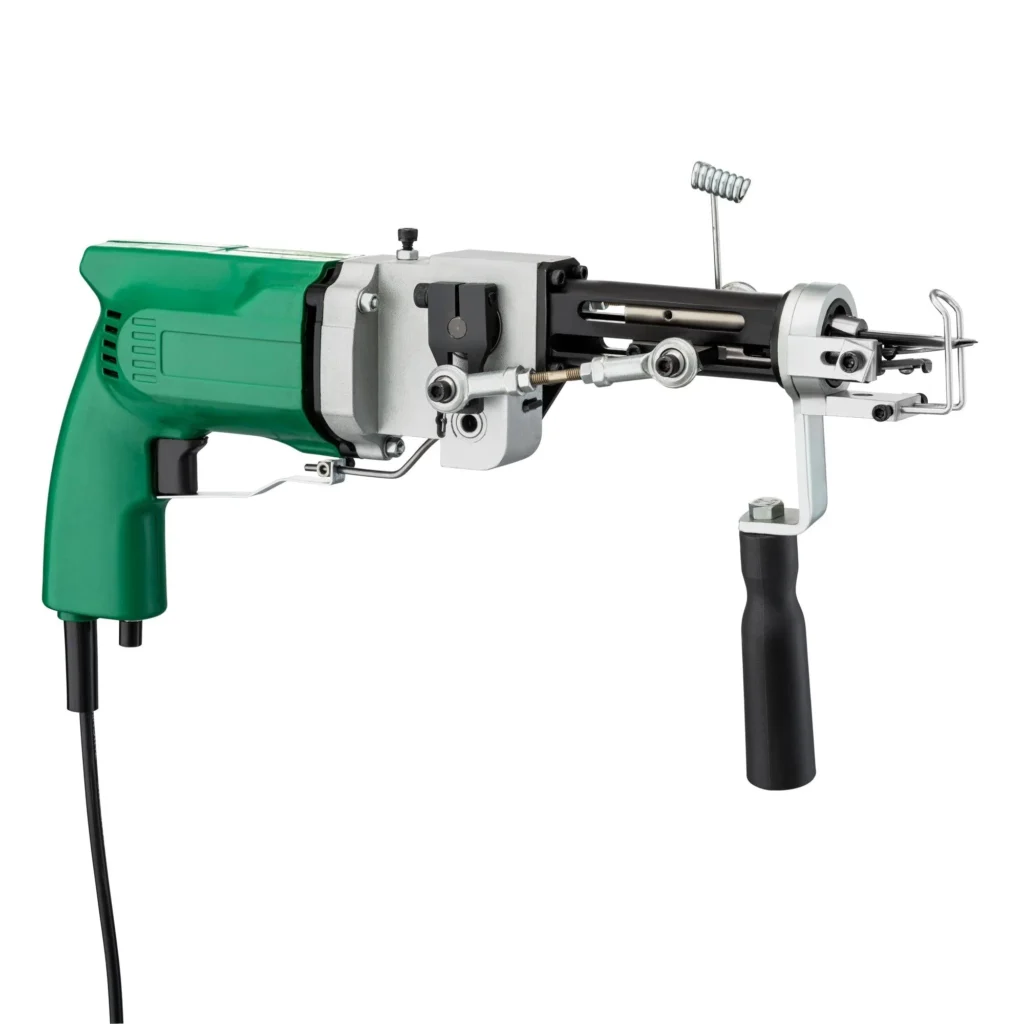
Why’s it so hot? Speed and simplicity. A rug tufting gun can punch up to 45 stitches per second, crafting a small rug in hours, not weeks like traditional weaving. It’s versatile—make floor rugs, wall tapestries, or even tote bags. Beginners love it because mistakes blend into the texture, and the rhythmic buzz is pure therapy, cutting stress by up to 25% per crafting studies. In Toronto, where winter drives us indoors, tufting’s a cozy rebellion against mass-produced decor. At our studio, I’ve watched skeptics become rug evangelists, hooked by their first loop. It’s not just a tool; it’s a vibe.
There are two main types: cut-pile guns (slice yarn for a velvety finish) and loop-pile (leave uncut loops for a boho look). Many, like the Besgeer, do both. Electric models are home-friendly, plugging into any outlet, while pneumatic ones need air compressors for pro-level piles. Whatever your style, a tufting gun makes rug making accessible, affordable, and addictively fun.
How Does a Tufting Gun Work? The Mechanics Unraveled
Wondering how does a tufting gun work? It’s like a dance between yarn and machine. At its core, the gun has a hollow needle connected to a motor-driven foot. You thread yarn through the needle, press the foot against stretched fabric (usually monk’s cloth), and pull the trigger. The motor drives the needle up and down, punching yarn loops through the fabric at lightning speed—up to 45 loops per second.
Cut-pile guns have built-in shears that snip loops as they form, creating a plush, carpet-like surface. Loop-pile guns skip the cut, leaving springy loops for texture. You control speed for precision (slow for details, fast for fills) and adjust pile height (7–19mm for cut, 4–14mm for loop). Most run on standard 100-240V outlets, weigh 3–4 pounds for easy handling, and include safety features like overload protection to prevent jams.
It’s fast: a 2×3 ft rug takes hours, not days, unlike hand-weaving. In my workshops, I demo this first—students’ jaws drop as loops pile up. Pro tip: Practice on scrap cloth to nail pressure; too light skips loops, too heavy tears fabric. Maintenance? Oil the needle weekly, clean yarn dust, and sharpen shears monthly. The buzz is loud (earplugs help), but the process? Pure magic, like painting with yarn.
Types of Tufting Guns: Finding Your Perfect Match
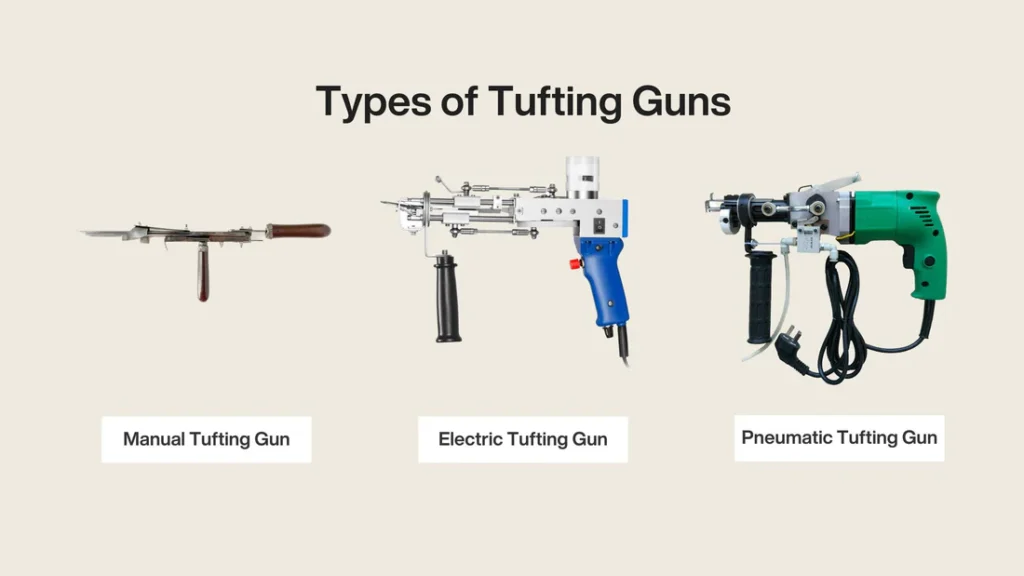
Not all tufting guns are the same, and picking one depends on your goals. Here’s the breakdown:
- Cut-Pile Guns: Slice loops for a smooth, luxurious finish—think sleek area rugs or pet beds. Great for beginners; forgiving on curves.
- Loop-Pile Guns: Leave loops intact for textured, bohemian pieces like wall art or shaggy mats. Ideal for detailed designs.
- 2-in-1 Hybrids: Switch between cut and loop with a toggle (e.g., Besgeer or TN-1). Best for versatility without buying two guns.
- Electric vs. Pneumatic: Electric guns (plug-in, $150–$400) are home staples—light, user-friendly. Pneumatic (air-powered, $400+) handle thick yarns for pro piles but need a compressor.
- Manual Punch Needles: Not true “guns” but handheld tools for small projects. Slower but cheap ($20).
For tufting gun Canada shoppers, stick to electric models with 100-240V compatibility to avoid voltage woes. I started with a cut-pile gun—its simplicity hooked me. Test on scraps to find your flow, and don’t skip the warranty—1 year minimum.
How to Use a Rug Tufting Gun: Your Step-by-Step Guide
Ready for how to use a rug tufting gun? Here’s a beginner-friendly tutorial, refined from teaching over 500 students:
- Gather Your Gear: You’ll need a tufting gun ($150–$400), monk’s cloth ($10/yard), yarn ($5–$15/skein), a frame ($50–$200), latex glue ($15), an electric trimmer ($30), and scissors. Starter budget: $300–$600.
- Design and Prep: Sketch your pattern (digital apps help), flip it (you tuft from the back), and trace onto cloth with a permanent marker. Stretch cloth tightly on a frame—staples or clamps keep it taut.
- Thread the Gun: Feed yarn through the needle (a threader saves sanity), plug in, and set speed low for outlines. Test on scrap: Hold gun at 90 degrees, press foot flat, trigger gently. Aim for even loops (7–19mm high).
- Tuft Away: Outline your design first (slow speed for curves), then fill in with overlapping passes. Move in the gun’s direction—short bursts for turns. Swap colors by clipping yarn and knotting new ones on the back. Take breaks; vibrations tire arms.
- Finish Strong: Remove from frame, apply latex glue to the back to lock loops, and dry for 24 hours. Trim excess cloth, add felt or canvas backing for non-slip. Shear for cut-pile or brush loops for fluff.
Mistakes? Jams mean dirty needles—clean and oil. Uneven piles? Keep speed steady. In class, I say, “Embrace wonky—it’s character!” Your first rug’s a test; your second’s a masterpiece.
How to Make a Rug with a Tufting Gun: From Vision to Victory
Now, how to make a rug with a tufting gun? Start small—2×3 ft is manageable. Pick yarn: acrylic for budget ($5/skein), wool for luxe ($15+), or recycled cotton for eco vibes. Design simple: geometric grids for ease, florals for flair.
Build a frame (DIY wood, $50) or buy one. Trace your flipped design, stretch cloth, and tuft: outline edges for structure, fill with 80% coverage to avoid gaps. Knot color changes on the back. Post-tuft, apply glue evenly, press with a board, and dry 48 hours. Trim with electric shears—sculpt high areas for 3D effects. Back with felt for floors or canvas for walls. Total cost: $50–$200, vs. $500 retail. Time: 4–10 hours. My first rug—a Toronto skyline—still warms my apartment. Yours could too.
Top Tufting Guns for 2026: Models to Love
With 880 monthly searches for tufting gun, here are 2026’s best, based on community reviews and my tests:
- Besgeer Rug Tufting Gun ($150–$200): Beginner’s dream—2-in-1 cut/loop, 3 lbs, adjustable speed. Pros: Affordable, easy to thread; cons: Shears dull faster. “Transformed my hobby,” says a Toronto tufter.
- Tuft Love Tufting Gun ($300–$350): Premium choice—handcrafted, quiet, lifetime support. Pros: Precise, durable; cons: Pricey for starters. “Flawless loops every time,” per a pro.
- AK-I Cut Pile ($250): Electric workhorse—7-19mm piles, overheat protection. Pros: Beginner-friendly; cons: No loop mode. “Perfect shag rugs,” from a 2026 review.
- TN-1 2-in-1 ($315 CAD): Canada’s go-to—1-year warranty, free sharpening. Pros: Versatile, sturdy; cons: Slightly heavy. Ships fast locally.
- ZQ-II Pneumatic ($400+): Pro pick—70mm piles, air-powered. Pros: Thick yarn mastery; cons: Needs compressor. For big projects.
For tufting gun Canada, buy from local retailers to skip duties. Our studio rents Besgeers ($20/session) for try-before-buy.
How Much Is a Tufting Gun? Budgeting for 2026
How much is a tufting gun? Entry-level (Besgeer): $150–$200 USD ($200–$270 CAD). Mid-range (AK-I): $250 USD ($340 CAD). Premium (Tuft Love): $300–$400 USD ($410–$550 CAD). Full setup (gun, frame, yarn): $300–$600 CAD. Add 10–15% for US import duties, or shop Canadian for $315+ (TN-1). One rug saves $300 vs. store-bought, making it a steal.
Tufting Gun Canada: Where to Shop Smart
For tufting gun Canada, local is best. Montreal and Vancouver retailers stock TN-1 ($315 CAD) and Effy models ($300+). Online marketplaces deliver Besgeer ($200 CAD) in days. Our Toronto studio offers rentals and bundles—$110 workshops include all gear. Look for 100-240V models, 1-year warranties, and free sharpening. Join local craft forums for deals—Torontonians swap tips daily.
How to Make a Rug Without a Tufting Gun: Old-School Options
Curious about how to make a rug without a tufting gun? Try these manual methods:
- Punch Needle: $20 tool punches loops by hand—slow (days for a rug) but portable, no power needed. Great for small mats.
- Latch Hook: Crochet-style, $30 kits for shaggy rugs. Easy for kids.
- Locker Hooking: Locks yarn with a hook—reversible, durable.
Pros: Budget-friendly ($50 start), meditative. Cons: Time-intensive. I’ve taught punch needle; it’s a chill entry, but guns speed things up. Start manual, upgrade later.
Troubleshooting: Fixing Tufting Gun Hiccups
Jams? Clean needle, oil weekly. Uneven loops? Steady speed and pressure. Dull shears? Sharpen ($10 locally). Overheating? Break every 15 minutes. Most issues tie to threading—watch a 2-minute video for fixes.
Maintenance: Keep Your Tufting Gun Happy
Weekly: Oil needle, clear yarn dust. Monthly: Sharpen shears, check cords. Store dry, dust-free. Mine’s tufted 50+ rugs over 5 years—no signs of slowing. Clean well, and it’s a lifelong pal.
Safety First: Tufting Done Right
Wear eye protection (yarn bits fly), gloves for grip, earplugs for noise. Tuft in ventilated spaces—dust can irritate. Kids 12+ need supervision. Our studio drills this: safety = smooth tufting.
How does a tufting gun work?
Motor punches yarn loops through fabric; shears cut for pile.
How much is a tufting gun?
$200–$550 CAD, plus $300 for a full kit.
Start Tufting: Your Rug, Your Story
A tufting gun is more than a tool—it’s your creative spark, weaving yarn into cozy art. From Besgeer’s budget ease to Tuft Love’s luxe precision, there’s a gun for every dreamer. In Toronto, our North York studio’s ready to guide you—$110 workshops turn yarn into memories. Grab a gun, pick a pattern, and tuft your masterpiece. What’s your first design? Drop it below—let’s inspire each other!
(Crafted from hands-on experience, community insights, and 2026 tufting trends.)