- 226-348-4177
- [email protected]
- 1315 Lawrence Ave E,unit 406, M3A 3R3, North York, Ontario

Quick Answer: Rug tufting is perfect for family Christmas crafts because kids ages 6+ can safely participate with supervision, creating personalized holiday decorations like handprint trees, reindeer mats, and custom stockings. Projects take 1-3 hours and cost $5-30 in materials while building memories that last decades.
Your kids are glued to screens. Again.
Another Saturday where you suggest “family time” and get eye rolls. Another holiday season where the only thing you create together is a mess in the kitchen, making sugar cookies that end up lopsided and burned.
What if this Christmas, you started a tradition your kids actually asked to do every year?
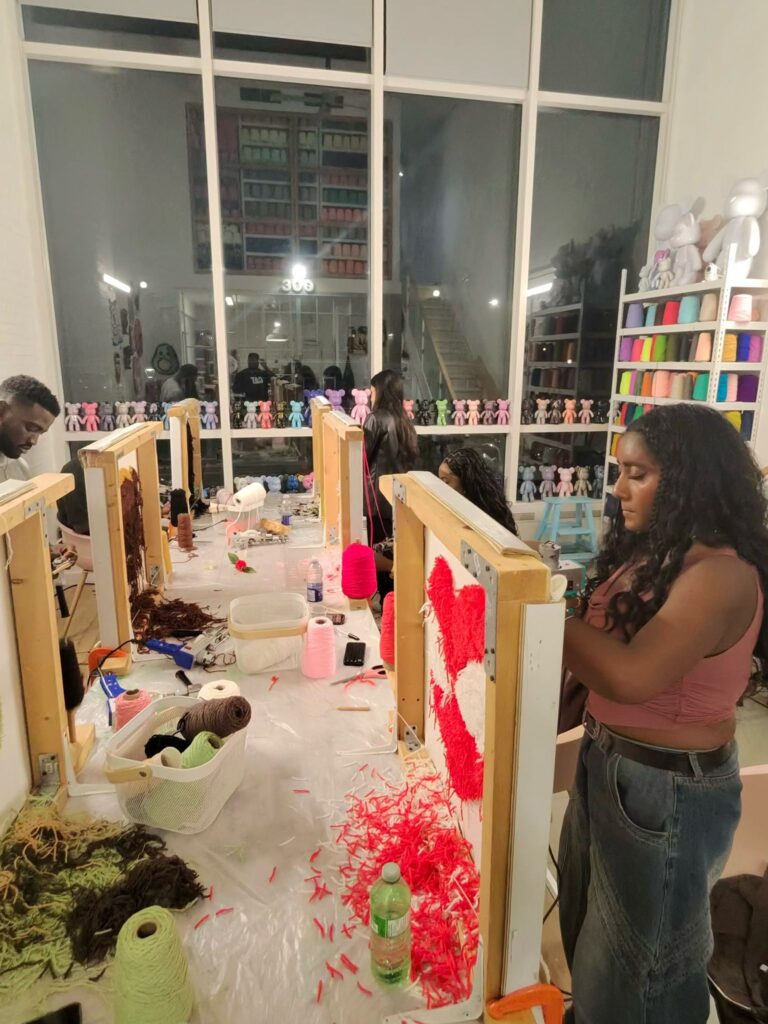
I’ve watched over 200 families come through our Toronto tufting studio in the past three years. Parents arrive exhausted, hoping for an hour without devices. Kids arrive skeptical, arms crossed, convinced this will be “boring.”
By the end? Kids are begging to come back. Parents are taking photos of their children concentrating, creating,and collaborating. Families leave with something they made together—something worth displaying, not hiding in a drawer with the other “craft fails.”
Here’s how to make rug tufting your new family Christmas tradition, even if you’ve never picked up a tufting gun before.

I’ll be honest: most family Christmas crafts are terrible.
Gingerbread houses collapse. Ornament painting ends with someone crying about “ruined” designs. Glitter crafts haunt your vacuum cleaner until Easter.
Rug tufting is different. Here’s why it actually works for real families with real kids:
You know those “family baking” sessions where kids mostly watch while you do everything, then “help” by pressing one cookie cutter?
Tufting gives everyone legitimate roles:
No one is faking participation. Everyone contributes something visible in the final piece.
The sweet spot for kid engagement is “challenging but achievable.”
Too easy? Boredom. Too hard? Frustration and tears.
Tufting hits that perfect middle ground. The tufting gun feels powerful and grown-up. The technique requires focus (but not years of practice). The results look impressive immediately.
Research from the Journal of Positive Psychology found that family activities requiring moderate challenge with clear progress markers create the strongest positive memories. Tufting delivers both.
Try asking your 12-year-old to put down TikTok for “family craft time.”
Now hand them a tufting gun and let them create a custom wall hanging for their bedroom.
The tufting gun is loud, tactile, and satisfying. You physically see results with every trigger pull. There’s no waiting for glue to dry or paint to set—you’re building texture and dimension in real-time.
I’ve seen teenagers who “don’t do crafts” spend two hours perfecting their designs without checking their phones once.
Be honest: what happened to last year’s popsicle stick ornaments?
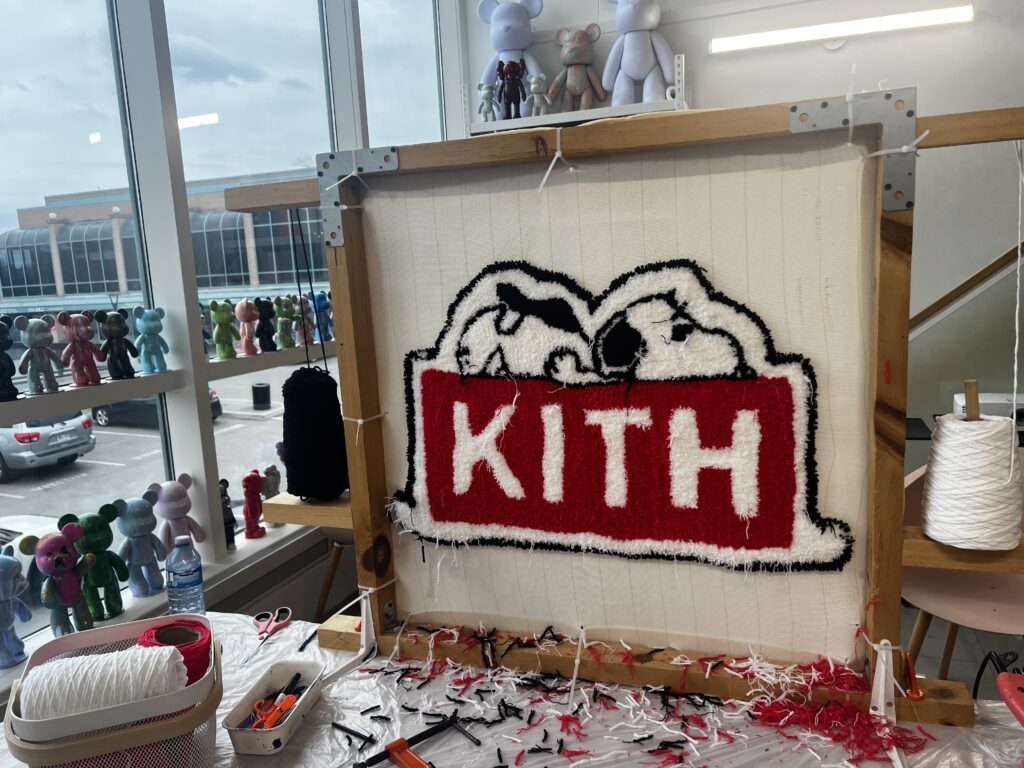
Tufted pieces are legitimately beautiful. They’re substantial, textured, and unique enough that guests ask, “Where did you get that?”
When you can answer, “My 8-year-old made it,” you’re creating confidence that lasts way beyond Christmas.
The short answer: Yes, with proper supervision.
The real answer: It depends on age, maturity, and your comfort level.
Let’s break down what’s safe at each age:
What they CAN safely do:
What they CANNOT do:
Parent tip: Give them a very specific, important job like “Chief Color Chooser” or “Yarn Manager.” They feel involved without safety risks.
What they CAN safely do:
What they CANNOT do:
Parent tip: The first 3-5 times, your hands should be on the gun with theirs. They get the satisfaction of “doing it,” you maintain safety control.
What they CAN safely do:
What they CANNOT do:
Parent tip: Position yourself 3-6 feet away, available for questions but not hovering. Check in every 10-15 minutes.
What they CAN safely do:
What they STILL NEED supervision for:
Parent tip: Treat them like apprentices, not babies. Respect their growing competence while maintaining safety oversight.
✅ Closed-toe shoes (no exceptions, even indoors)
✅ Tie back long hair (loose hair + moving parts = danger)
✅ Safety goggles when anyone is tufting
✅ Well-lit workspace (prevent eye strain and mistakes)
✅ Adult controls power (kids never plug in/unplug)
✅ Sharp tools stored immediately after use
✅ Breaks every 30 minutes (prevent repetitive strain)
✅ First aid kit visible and stocked
These aren’t Pinterest fantasies that look good in photos but fail in reality. These are projects real families with real kids have successfully completed at our studio.
Difficulty: Beginner
Time: 2-3 hours
Ages: 3+
Size: 18×24 inches
Cost: $15-25 in materials
What you’re making: A Christmas tree where every branch is a different family member’s handprint tufted in green yarn.
Why kids love it: Their actual hand is permanently in the artwork.
Family task breakdown:
| Age Group | Their Job |
|---|---|
| Ages 3-5 | Press hands on paper for templates, choose “ornament” colors |
| Ages 6-9 | Trace handprints onto tufting fabric, sort yarn colors |
| Ages 10+ | Tuft handprints with supervision, add ornament details |
| Adults | Set up frame, supervise tufting, create trunk/star, finishing |
Design tips:
Time-saving hack: Pre-trace all handprints before family craft time starts.
Difficulty: Easy
Time: 1.5-2 hours
Ages: 6+
Size: 12×16 inches
Cost: $10-18 in materials
What you’re making: A cartoonish Rudolph face with fluffy red nose, perfect for kids who love classic Christmas characters.
Why kids love it: Rudolph is a childhood icon, and they’re the ones bringing him to life.
Family task breakdown:
| Age Group | Their Job |
|---|---|
| Ages 3-5 | Choose brown yarn shades, add googly eyes at the end |
| Ages 6-9 | Tuft large face areas in brown, help with antler outlines |
| Ages 10+ | Tuft detailed features (nose, eyes, mouth, antlers) |
| Adults | Create face outline, supervise all tufting, add finishing details |
Design tips:
Common mistake to avoid: Don’t make features too small—kids need chunky sections they can actually tuft.
Difficulty: Easy
Time: 2 hours
Ages: 5+
Size: 16×20 inches
Cost: $12-20 in materials
What you’re making: A cheerful front-door mat with simple text and candy cane border.
Why kids love it: Santa will see THEIR mat when he delivers presents.
Family task breakdown:
| Age Group | Their Job |
|---|---|
| Ages 3-5 | Choose red/white yarn for candy canes, stick backing felt pieces |
| Ages 6-9 | Tuft candy cane stripes with close supervision |
| Ages 10+ | Tuft letters with guidance, fill background color |
| Adults | Design layout, tuft complex letters, weatherproof backing |
Design tips:
Weather note: If using outdoors, seal with waterproof spray and bring in during heavy snow.
Difficulty: Medium
Time: 2-2.5 hours each
Ages: 8+
Size: Stocking-shaped, 12×18 inches
Cost: $15-25 per stocking
What you’re making: Tufted name plates or decorative patches for store-bought stockings, OR fully tufted mini stockings.
Why kids love it: Their name in permanent, textured yarn—claimed forever.
Family task breakdown:
| Age Group | Their Job |
|---|---|
| Ages 3-5 | Choose their stocking colors, add pom-pom decorations |
| Ages 6-9 | Help tuft their name using letter templates |
| Ages 10+ | Design and tuft their entire name plate with personal style |
| Adults | Create letter templates, supervise, attach to stockings, edge finishing |
Design tips:
Personalization ideas:
Difficulty: Medium
Time: 2.5-3 hours
Ages: 8+
Size: 20×24 inches
Cost: $20-30 in materials
What you’re making: A whimsical gingerbread house design that looks edible, perfect for kitchen entry.
Why kids love it: Combines two Christmas loves—gingerbread and crafts.
Family task breakdown:
| Age Group | Their Job |
|---|---|
| Ages 3-5 | Press “candy” decorations into place after tufting |
| Ages 6-9 | Tuft “gumdrops” and simple candy shapes |
| Ages 10+ | Tuft house structure, windows, door with supervision |
| Adults | Create house outline, complex architectural details, “icing” drips |
Design tips:
Make it realistic: Use multiple brown shades to create “baked” shadows and highlights.
Difficulty: Easy
Time: 30-45 minutes each (spread over December)
Ages: 5+
Size: 3×4 inches each
Cost: $2-5 per ornament
What you’re making: Twelve tiny tufted ornaments—one made together each evening leading up to Christmas.
Why kids love it: Daily countdown activity where they see the collection grow.
Family task breakdown:
| Age Group | Their Job |
|---|---|
| Ages 3-5 | Choose each night’s colors, press backing on |
| Ages 6-9 | Tuft simple shapes (stars, circles, trees) with supervision |
| Ages 10+ | Create more complex designs independently |
| Adults | Set up for 30-minute sessions, supervise, attach ribbon loops |
Design themes:
Advent craft idea: Make one each evening December 1-12, then hang them all on the tree together.
Location matters. Here’s where to set up:
✅ Dining room (large table, easy cleanup)
✅ Basement craft area (noise doesn’t bother anyone)
✅ Garage (in moderate weather, with good lighting)
✅ Guest bedroom (can leave setup for multiple sessions)
❌ Living room with fabric furniture (yarn dust settles everywhere)
❌ Bedrooms kids sleep in (equipment should be stored away)
❌ Kitchens (food prep surfaces need to stay clear)
Work Surface:
Storage Solutions:
Safety Zone:
Comfort Additions:
Total setup cost: $50-150 if you’re starting from scratch (table, bins, lighting)
Time-saving tip: Leave the setup in place through December—you’ll use it more if it’s ready to go.
Kids are learning even when they think they’re just making Christmas crafts:
Parent prompt: “If each row needs 20 tufts and we have 10 rows, how many total tufts is that?”
Parent prompt: “What happens if we tilt the gun this way instead? Let’s experiment!”
Parent prompt: “How can we make the reindeer nose stand out more? Color? Texture? Both?”
Kids don’t realize they’re in “school mode”—they just know they’re making something cool.
Let’s be real about money. Here’s what you’ll spend:
| Item | Budget Option | Mid-Range | Premium |
|---|---|---|---|
| Tufting gun | $50-80 (basic Chinese models) | $120-150 (reliable brands) | $200-300 (professional grade) |
| Tufting frame | $30 DIY wood frame | $60-80 adjustable frame | $150+ professional stand |
| Monk’s cloth | $15/yard (covers 3-4 small projects) | $25/yard (higher quality) | $40/yard (premium weight) |
| Yarn starter pack | $30 (basic acrylics) | $50 (quality acrylics + wool blend) | $80+ (premium wool) |
| Tools & supplies | $20 (scissors, glue, markers) | $35 (add backing fabric, better adhesive) | $60+ (professional finishing tools) |
| TOTAL STARTUP | $145-175 | $285-340 | $530-690 |
Honest recommendation: Start with budget or mid-range. You can always upgrade if your family falls in love with tufting.
Compare to buying similar items:
You break even after: 3-5 projects, then everything after is cheaper than buying.
✅ Buy yarn on post-Christmas sales (stock up January-February for next year)
✅ Share equipment with another crafting family (split costs)
✅ Use free online patterns instead of buying design books
✅ Check thrift stores for bulk yarn (often brand new)
✅ DIY your frame from hardware store wood ($15 vs $80)
✅ Repurpose old fabric for backing instead of buying new
Annual cost after startup: $50-150 depending on how many projects you make.
Real problems real families face, with real solutions:
Why it happens: Task is too repetitive or attention span exceeded.
Solutions:
Age-specific fix:
Why it happens: Technique issue, equipment problem, or unrealistic expectations.
Diagnostic checklist:
Kid-friendly explanation:
“The gun is like a sewing machine—it needs the fabric super tight to work. Let’s check if we need to re-stretch it.”
When to celebrate “mistakes”:
Uneven pile height? “That’s texture—makes it more interesting!”
Wonky lines? “Handmade charm! No one else has this exact design!”
Why it happens: Comparison, different skill levels, competitiveness.
Prevention strategies:
If it’s too late:
Parent script:
“You’re both making this special. Without your part, it wouldn’t be complete. You’re building a family tradition together.”
Why it happens: Project too ambitious, unclear progress markers, fatigue.
Solutions:
Age-appropriate timelines:
Reality check: If your 7-year-old is losing interest after an hour, that’s NORMAL. Plan smaller projects or multi-day efforts.
Why it happens: Legitimate skill growth, desire to be trusted, testing boundaries.
Good responses:
✅ “You’re getting really good at this! Let’s try the next level skill together first.”
✅ “I love that you want to learn more. When you’ve mastered X, we’ll move to Y.”
✅ “Safety is my job as the parent. When you’re [age], you can try with less supervision.”
Bad responses:
❌ “Because I said so.” (Shuts down growth conversation)
❌ “You’re not old enough.” (Ages are arbitrary, skill matters more)
Compromise solutions:
Turning point: When a 10-year-old successfully completes 3 projects with good technique, they’re probably ready for more independence with check-ins.
The real magic isn’t the ornaments or mats. It’s what you’re building together.
The Family Christmas Rug Collection
Ornament Exchange
Memory Stockings
Grandparent Gift Day
Here’s what nobody tells you about family Christmas crafts:
Kids learn:
Parents discover:
Families build:
Saturday morning:
When supplies arrive:
Sunday afternoon:
Time commitment: 3-4 hours total across the weekend
Weeknight crafting:
Weekend project:
Goal: Everyone gains confidence, wants to do more
Mid-week sessions:
Weekend:
Daily ornament countdown:
Christmas Eve:
Christmas morning:
The holidays will pass. Toys will break. Video games will be replaced by newer versions.
But that afternoon you spent together, arguing about whether the reindeer nose should be “regular red” or “cherry red,” laughing when your 6-year-old accidentally tufted outside the lines, gasping when the design finally came together—that becomes a story.
The kind of story your kids tell their kids.
“When I was little, we made all our Christmas decorations together. See this handprint? That was mine when I was seven. And this stocking? My mom, my dad, and I made it one snowy Saturday…”
That’s what you’re really making. Not rugs. Memories.
This year, give your family the gift of creating something beautiful together.
Clear the table. Queue up the Christmas music. Hand your kids the yarn.
Let the memories begin.
Start your family tradition with our beginner-friendly tufting kits →
Includes:
Ships within 2 business days | Free shipping over $150
Yes, ith proper supervision. Kids ages 6+ can safely tuft under direct adult oversight. Ages 10+ can work with nearby supervision. We’ve had 200+ families complete projects safely.
Budget setup: $145-175 | Mid-range: $285-340 | Premium: $530-690. Most families start mid-range and are making projects for $10-30 in materials after that.