
Rug Tufting vs. Pottery vs. Candle Making: Which Toronto Workshop Is Right for You?
Toronto’s workshop scene in 2026 has exploded past paint-and-sip and into something genuinely interesting.
Walk into the right studio on a Saturday afternoon and you might be throwing clay on a wheel in Parkdale, pouring a custom-scented soy candle in a Yorkville heritage space, or guiding a motorized tufting gun through a 2-foot canvas in North York. Three very different rooms. Three very different experiences. Three very different things you’ll take home at the end of it.
The problem isn’t finding a workshop in Toronto anymore. The problem is knowing which one to book.
This guide makes that decision straightforward. Not by declaring a winner — there isn’t one — but by being honest about what each experience actually feels like, who it’s genuinely right for, and where each one falls short. If you read this and still can’t decide, there’s a quiz at the end.
Let’s start with what actually matters when you’re choosing a workshop.
The Four Questions That Actually Decide This
Before comparing the three formats, it helps to know which questions matter. Most workshop comparison guides focus on cost and duration. Those matter, but they’re not the deciding factors for most people. The real questions are:
What do you want to feel during the experience? Focused and absorbed? Relaxed and sensory? Social and loud? Each of these three workshops produces a completely different emotional state while you’re doing it.
What do you want to walk out with? Something functional you’ll use every week? Something decorative that changes a room? Something you’ll burn through in six weeks and love every minute of?
Who are you bringing, and what does that group need? A first date is different from a girls’ night, which is different from a corporate team, which is different from a solo afternoon. The social dynamics of each format are genuinely distinct.
How long do you actually have? Not “how long is the session” but how much time you want to spend being present and engaged. Some people want two hours. Some want five. The right answer changes which workshop is even on the table.
With those questions in mind — here’s how the three compare.
Rug Tufting: The One That Consumes You
What It Actually Is
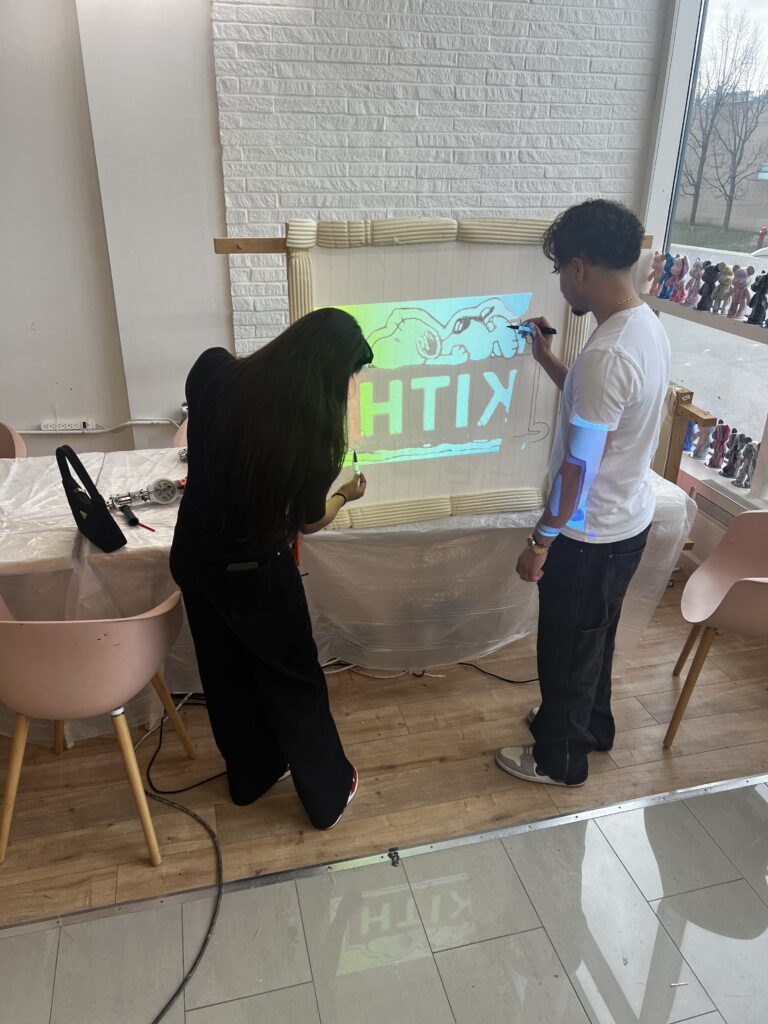
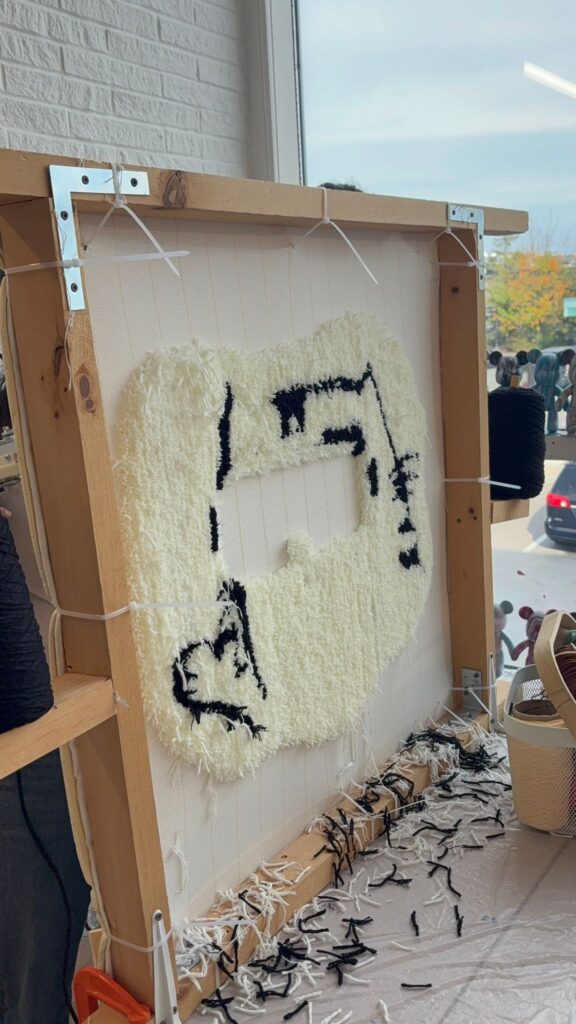
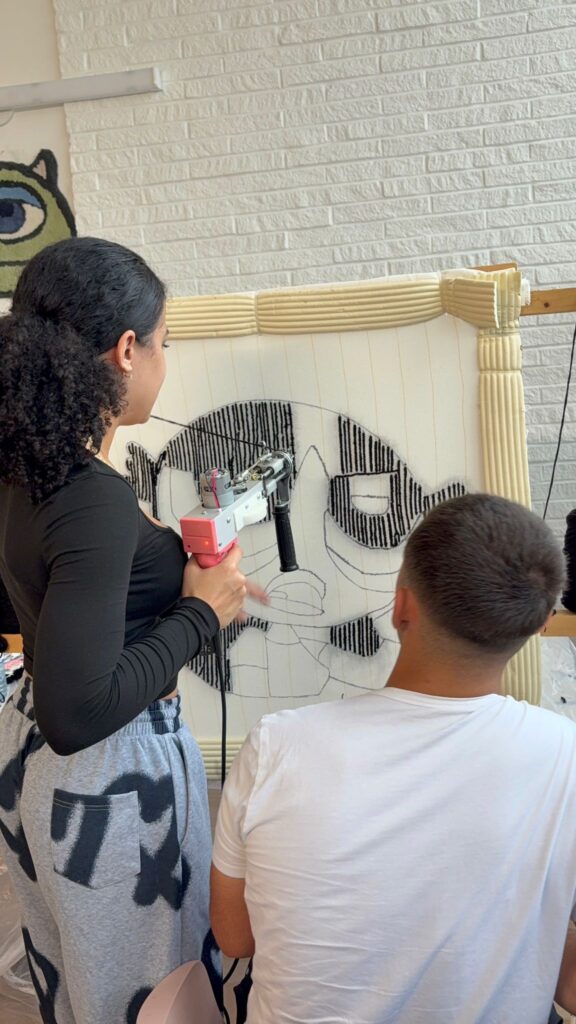
Rug tufting is a textile art form that involves using a handheld motorized tufting gun to punch loops of yarn through a stretched fabric backing, building up a dense, plush surface that becomes a rug, wall hanging, or decorative piece. The gun runs on electricity and drives the yarn through the fabric at speed — you move it the way a painter moves a brush, following the lines of your design, section by section, colour by colour.
The result is tactile in a way that almost no other creative output is. You’re not looking at your piece from a distance — you’re inches away from it, feeling the resistance of the fabric, watching the texture build up in real time. By the end of a session, you’ve made something with a physical presence that a painting or a candle simply doesn’t have.
The Experience: What It Feels Like
The first ten minutes of a tufting session feel like figuring something out. The gun takes a minute to get comfortable with, the tension of the fabric requires some adjustment, and the muscle memory isn’t there yet. By minute twenty, most people have hit a rhythm. By minute forty, the conversation has taken over and the tufting is happening almost on autopilot — hands moving, mouth talking, piece growing.
This is the quality that makes tufting work so well for groups: it’s engaging enough that you’re genuinely absorbed in it, but not so demanding that you can’t hold a full conversation at the same time. You’re making something while you talk. The two things happen simultaneously rather than one interrupting the other.
Sessions run 3 to 5 hours, which sounds long but consistently doesn’t feel it. The most common piece of feedback from first-time tufters isn’t “that was fun” — it’s “I can’t believe that much time passed.”
What You Walk Out With
A physical textile object in whatever size and design you chose. Most beginners start with a 50x50cm piece, which takes roughly 2 to 3 hours and produces something genuinely impressive — the kind of thing you hang on a wall, put on a shelf, or put on your floor and leave there. Larger pieces (70x70cm, 100x120cm) take proportionally longer and produce something that properly changes a room.
The object is yours in a way that manufactured objects aren’t. Every loop of yarn was placed by your hand. The design decisions were yours. The colour choices were yours. It has a provenance that a purchased rug categorically doesn’t.
Where It Falls Short
Tufting is not the right workshop for someone who wants a short, breezy afternoon. The minimum meaningful session is around 3 hours — less than that and you’re either rushing a small piece or leaving something unfinished, neither of which feels satisfying. If your group has a hard stop at dinner time and you’re starting at 5pm, this isn’t the format.
It also produces yarn debris. The studio handles cleanup, but the tufting process is inherently physical and slightly chaotic — yarn scraps, fabric tension, the mechanical noise of the gun. If you’re someone who finds disordered environments stressful, pottery’s cleaner setup might suit you better.
Where to Do It in Toronto
ZuoZuo Studio (North York, 1315 Lawrence Ave E) is Toronto’s standout tufting experience and the one most consistently recommended by people who’ve tried multiple workshops. The studio’s instructors — Emmanuel and Natasha — guide every session personally. Maximum 6 people per session keeps the ratio of attention to participants genuinely high. BYOB policy. All materials included.
Sizes and pricing: Small 50x50cm ($110, 2–3 hours), Medium 70x70cm ($138, 3–4 hours), Large 80x100cm ($168, 4–5 hours), X-Large 100x120cm ($210, 5–7 hours). ZuoZuo also runs fluid bear painting (1.5 to 2.5 hours, from $65) and pearl jewelry making ($75 per person BOGO) — making it possible to build a full creative day across multiple experiences.
Thursday to Sunday, 12pm to 8pm. Two minutes from North York Centre subway station.
Other Toronto tufting studios include Chillax Studio (their main competitor, with similar format and slightly different pricing) and a growing number of pop-up tufting events through Eventbrite. ZuoZuo’s small group size and BYOB policy remain distinctive.
Best for: Groups of 2 to 6 | Long afternoon availability | People who want something they’ll keep for years | BYOB-social energy | Tactile, absorbing creative experiences
Pottery: The Meditative One
What It Actually Is
Pottery is one of the oldest forms of human making, and there’s a reason it keeps coming back. Working with clay — whether on a wheel or by hand — engages a part of the brain that very little else reaches. The material is responsive to touch in an almost biological way: too much pressure and it collapses, too little and it won’t move. Getting it right requires the kind of focused, physical attention that switches off the cognitive chatter more effectively than almost any other activity.
In Toronto, pottery workshops break into two main formats: wheel throwing (using a spinning wheel to shape the clay into vessels — the classic Ghost movie image) and hand building (coil building, slab construction, pinch pot — slower, more sculptural, less dramatic but equally satisfying).
For first-timers, wheel throwing is the one people want to try. It’s harder than it looks, more satisfying than expected when it goes right, and the combination of failure and occasional breakthrough is a genuinely engaging experience.
The Experience: What It Feels Like
Pottery is the quietest of the three experiences. The wheel has a hum. The clay is cool and wet. The studio tends to be calmer in atmosphere than tufting — less BYOB-social, more quietly focused. This isn’t a criticism; it’s the whole point. Pottery is the workshop you book when you want to slow down, use your hands, and not be required to perform enjoyment.
The sensation of centring clay on a wheel for the first time is almost indescribable to someone who hasn’t done it. The clay moves under your palms with a momentum that’s partly physics and partly feel, and getting it to centre — truly still and balanced — is one of those small physical achievements that produces genuine satisfaction every time it happens.
Hand building sessions are more predictable in outcome — you’re less likely to watch your vessel collapse on a coil-building afternoon — and often more relaxing as a result. Some people prefer this precisely because the challenge is more accessible and the results feel more immediately yours.
What You Walk Out With
Here’s the important caveat of pottery: you don’t walk out with your finished piece on the day.
The clay needs to dry (called “greenware”), be bisque-fired in a kiln at around 1000°C, glazed, and then glaze-fired at an even higher temperature. From session to finished piece takes typically 4 to 8 weeks depending on the studio’s kiln schedule. You leave the session with a memory and a promise — and come back weeks later to find out what your piece became.
Some people find this extended relationship with the object meaningful: the anticipation, the pickup, the reveal. Others find it frustrating — they wanted to take something home today. If you’re in the second camp, pottery is not the right workshop for you.
The finished pieces are typically functional objects: mugs, bowls, vases, small vessels. They go into use. You drink your morning coffee from something you made. That’s a satisfying daily experience, but it’s a different category of output from a tufted rug or a candle — utilitarian rather than decorative or sensory.
Where to Do It in Toronto
Parkdale Pottery (Parkdale, women-owned) offers single-session wheel throwing and hand-building classes from $70 to $89, small class sizes, and a warm studio atmosphere that’s consistently well-reviewed for beginners. They also run private events for groups.
Clay With Me (two downtown Toronto locations) is the city’s most prominent studio for group pottery events and corporate bookings — accommodating 4 to 75 people and offering wheel throwing, hand building, and paint-your-own pottery sessions. Their outdoor pottery classes are currently running through summer 2026 as part of their 10th anniversary programming.
The Pottery (downtown) runs beginner wheel-throwing sessions for $75 plus HST in very small classes of four students maximum, with one-on-one instructor support. They also sell workshops through Groupon for accessible entry pricing.
Pottery Dream (Danforth) offers hand-building and wheel sessions with a calm, minimal studio aesthetic, starting from $50 for single sessions. Their Saturday jazz nights — pottery with live music — are worth noting as a genuinely unusual Toronto experience.
Olive Branch Pottery (downtown) runs affordable hand-building classes from $40, the most accessible entry point on this list, in a small family-owned studio environment.
Finished pieces from all studios typically take 4 to 8 weeks from session to pickup.
Best for: Solo visitors seeking decompression | Anyone who wants to develop a skill over time | Groups that prefer a quieter, more focused energy | Teams that want a post-event “second chapter” when pieces are ready for pickup | People with a 2-hour window rather than a 4-hour one
Candle Making: The Sensory One
What It Actually Is
Candle-making workshops are fundamentally scent design sessions with a physical output. The technical process of melting wax, choosing a wick, and pouring is relatively simple — the heart of the experience is the fragrance: blending top, middle, and base notes into a custom scent that’s entirely yours, choosing a vessel, and watching a luxury object take shape around something invisible.
Of the three workshops, candle making is the most immediately sensory. You’re working with fragrance from the moment you sit down — smelling, comparing, rejecting, returning to something you dismissed twenty minutes ago. The olfactory engagement is total in a way that tactile workshops aren’t. This is either its greatest strength or an irrelevance, depending entirely on how much you care about scent.
The Experience: What It Feels Like
The best candle making experiences in Toronto are designed to feel like a luxury afternoon rather than a craft class. Kandl Artistique in Yorkville — the city’s most prominent candle workshop — has a 2,500-square-foot heritage space with a café, fragrance library, and a premium atmosphere that signals from the moment you arrive that this is not a community centre craft session. Their custom cocktail menu, Mariage Frères teas, and charcuterie add-ons make the social layer of the experience explicit.
The workshop itself runs 90 minutes and guides you through blending a custom fragrance from over 125 notes before pouring your candle into one of their signature hand-blown Polish glass vessels. You leave 90 minutes later with a fully cured candle packaged and ready to go — the fastest of the three formats from arrival to finished object.
Yummi Candles in the Distillery District offers a similar experience at a slightly lower price point, with multiple sessions daily (11am–1pm, 2–4pm, 6–8pm) and a setting that takes advantage of the Distillery District’s cobblestone atmosphere.
What You Walk Out With
A luxury candle you designed and made, in a beautiful vessel, ready to use. This is the most “giftable” output of the three formats — a candle in quality packaging is immediately presentable in a way that a tufted rug (which needs to go on a wall or floor to be appreciated) and a piece of pottery (which needs to be washed and used) don’t always are.
The candle will last, depending on size and burning habits, roughly 40 to 60 hours. It will then be gone. This impermanence is either a strength (the experience was the point, the object is a bonus) or a limitation (compared to a rug or a mug that lives on indefinitely).
Where It Falls Short
Of the three formats, candle making is the one most likely to feel like a premium experience that’s slightly more curated than it is creatively demanding. The process is guided to the point where the variables are scent choice and colour — both meaningful decisions, but not the kind of total creative investment that tufting or pottery requires. If you want to feel like you genuinely made something from scratch with your own skill, the limited technical difficulty of candle making can feel a little like a gap.
It’s also the most explicitly social of the three formats — which makes it ideal for date nights, girls’ nights, and celebrations, but less ideal for the person who wants to spend an afternoon in genuine creative absorption.
Where to Do It in Toronto
Kandl Artistique (88 Avenue Rd, Yorkville) — $95 per person, 90 minutes, groups of up to 30, full café and event space. The premium option. Requires a $47.50 per person deposit to book. Automatic 18% gratuity for groups of 8+. Their Kandl Café serves cocktails, teas, and espresso. The most photographed candle workshop in Toronto by a significant margin.
Yummi Candles (10 Trinity St, Distillery District) — multiple daily sessions, highly accessible booking, Distillery District setting that works naturally as part of a longer day in the neighbourhood. Strict 10-minute late policy — arrive on time or risk being rescheduled.
MadeByMe Co. (across Toronto and The Beaches) — eco-focused, essential oil-based fragrances, vegan practices, up to 20 people. You make a set of six soy candles rather than one, making it better value if you want quantity alongside the experience.
Terradomi Candle Co. (mobile, GTA-wide) — comes to you, ideal for corporate events and private parties. Session includes one scented soy candle and a wax painting activity on a pillar candle.
Best for: Date nights | Girls’ nights | Birthdays where the output needs to be giftable | People who love fragrance and sensory experiences | Groups wanting a 90-minute experience with drinks | Anyone who wants to take something home today
The Honest Comparison: Side by Side
Here’s every metric that matters, in a single table:
| Rug Tufting | Pottery | Candle Making | |
|---|---|---|---|
| Duration | 2–7 hours | 1.5–2 hours (session) | 90 minutes |
| Take home today? | Yes | No (4–8 weeks) | Yes |
| Price per person | $110–$210 | $40–$89 | $50–$95 |
| Group size sweet spot | 2–6 | 2–12 | 2–30 |
| Skill required | None | None (but wheel is tricky) | None |
| BYOB possible? | Yes (ZuoZuo) | Rarely | Sometimes |
| Output type | Decorative / functional textile | Functional ceramic | Sensory luxury object |
| Output lifespan | Permanent | Permanent | 40–60 burn hours |
| Energy level | Social + absorbed | Quiet + meditative | Social + sensory |
| Conversation-friendly? | Very | Somewhat | Very |
| Best for groups? | Yes | Yes (smaller) | Yes (larger) |
| Best solo? | Yes | Yes | Yes |
| Best date night? | Yes | Yes | Yes |
The Quiz: Which One Is Actually Right for You?
Answer each question honestly and tally your results.
Question 1: How much time do you have?
- Under 2 hours → C (Candle Making)
- 2 to 3 hours → B (Pottery) or C
- 3 hours or more → A (Rug Tufting)
Question 2: What do you want to take home?
- Something that changes a room or lives on a wall → A
- Something I’ll use every day for years → B
- Something beautiful that I’ll burn through happily → C
Question 3: What energy are you in?
- I want to be completely absorbed and forget about time → A
- I want to slow down, focus, and be quietly creative → B
- I want to feel luxurious, sensory, and social → C
Question 4: Who are you bringing?
- A close group of 2 to 6, BYOB energy → A
- 1 to 3 people, prefer a quieter vibe → B
- A group of any size including large parties → C
Question 5: What’s your budget?
- Under $60 per person → B (Pottery, Olive Branch) or C (Yummi)
- $75 to $130 per person → A (ZuoZuo small/medium) or B
- $130 to $210 per person → A (ZuoZuo large) or C (Kandl)
Mostly A: Book a tufting session at ZuoZuo Studio. Mostly B: Book a pottery class at Parkdale Pottery or Clay With Me. Mostly C: Book a candle making session at Kandl Artistique or Yummi Candles. Roughly even split: Pick the one whose output you most want to live with. The piece you go home with is the clearest indicator of which workshop is right for you.
What If You Want to Do More Than One?
All three are worth doing, and they complement each other well — which is to say, doing all three over a season gives you three genuinely different experiences rather than three versions of the same thing.
The natural order, if you’re building a workshop season in Toronto, is: candle making first (easiest commitment, 90 minutes, sensory warm-up to the world of hand-making), pottery second (the skill that rewards returning, and picking up your finished piece weeks later is its own satisfaction), and tufting third or last (the most invested, the most absorbing, and the one that produces the piece you’ll keep the longest).
If you want to do multiple experiences in a single day, ZuoZuo Studio’s combination options are the most practical: fluid bear painting (1.5 to 2.5 hours) followed by a tufting session, or pearl jewelry making (1.5 to 2 hours) as a closer after a longer tufting session. The studio is set up for extended creative days and the BYOB policy makes it the most relaxed multi-activity environment on this list.
The Bottom Line
Rug tufting is for people who want to make something permanent, who have time to really commit to an afternoon, and who want the experience of being completely absorbed in something for four hours. ZuoZuo Studio is the place.
Pottery is for people who want to slow down, who find tactile, meditative activities genuinely restorative, and who are comfortable with a 4 to 8-week wait for a finished piece they’ll use every day for years. Parkdale Pottery and Clay With Me are the places.
Candle making is for people who love fragrance, who want a luxury 90-minute experience with a beautiful giftable output, and who are planning a date night, birthday, or girls’ afternoon. Kandl Artistique and Yummi Candles are the places.
None of them is wrong. All of them are better than another paint-and-sip night.
ZuoZuo Studio offers rug tufting, fluid bear painting, and pearl jewelry making at 1315 Lawrence Ave E, Unit 406, North York, Toronto. Open Thursday to Sunday, 12pm to 8pm. BYOB-friendly. Maximum 6 people per session. All experiences are fully guided and beginner-welcome. Book at zuozuostudio.ca or call 226-348-4177.