
How to Clean a Hand-Tufted Wool Rug: A Complete Care Guide
A hand-tufted wool rug is more than decor — especially if it’s one you made yourself. It’s a genuinely different kind of object to own than a mass-produced rug, and it deserves a care routine that matches how it’s actually built. Because hand-tufted construction relies on glued backing rather than woven or knotted construction, it needs a gentler approach than you’d use on a standard machine-made rug. This guide covers everything from daily maintenance to deep cleaning and when it’s worth calling in a professional.
Why Hand-Tufted Wool Rugs Need Different Care
Understanding the construction helps explain the care rules. A hand-tufted rug is made by punching wool (or acrylic) yarn through a stretched fabric backing using a tufting gun, then sealing the back with glue and a secondary backing fabric to hold everything in place.
That glued construction is the key thing to keep in mind: excess water, high heat, and harsh chemicals can all weaken the adhesive over time, leading to the pile lifting or shedding. Wool itself is also more delicate than synthetic fibers — it holds onto moisture longer, can be damaged by high heat, and requires gentler cleaning products than you’d use on tougher materials. None of this makes a hand-tufted wool rug high-maintenance, exactly — it just means the right kind of maintenance matters more than it would with a more industrial product.
1. Daily and Weekly Vacuuming: The Foundation of Good Care
Regular vacuuming is the single most impactful thing you can do for a wool rug’s longevity. Dust, dirt, and pet dander settle deep into the pile over time, and left alone, those particles act almost like sandpaper against the wool fibers every time the rug is walked on — gradually wearing them down.
How often: In high-traffic areas (entryways, living rooms), aim for two to three times a week. In lower-traffic spaces (bedrooms, home offices), once or twice a week is generally enough.
Vacuum settings matter:
- Turn off the beater bar or brush roll. A spinning brush roll is designed for carpet fibers woven into a backing — on a tufted rug, it can catch and pull individual loops, creating bald spots over time.
- Use lower suction, or a “bare floor” setting if your vacuum has one. Very high suction can put stress on the glued backing, especially on rugs with a looser or thicker pile.
- Vacuum in the direction of the pile, not against it — running your hand over the rug will show you which direction lies flat.
Technique tips:
- Move slowly rather than quickly back-and-forth — dust sits deeper than it looks, and a slow pass picks up more of it.
- Overlap your passes to make sure you’re covering the full surface.
- Use a hose attachment for edges, corners, and fringe, where an upright vacuum head often misses.
- Every month or so, flip the rug (with help, if it’s large) and vacuum the back — dust migrates from the backing up through the pile over time, so cleaning both sides keeps things genuinely fresher.
A general note on vacuum choice: look for a model with adjustable suction and the ability to disable the brush roll — many upright and canister vacuums offer this. Robot vacuums are best avoided on tufted rugs specifically, since their brush mechanisms aren’t designed to distinguish between carpet and tufted loops, and repeated passes can cause more wear than a manual vacuum used less frequently.
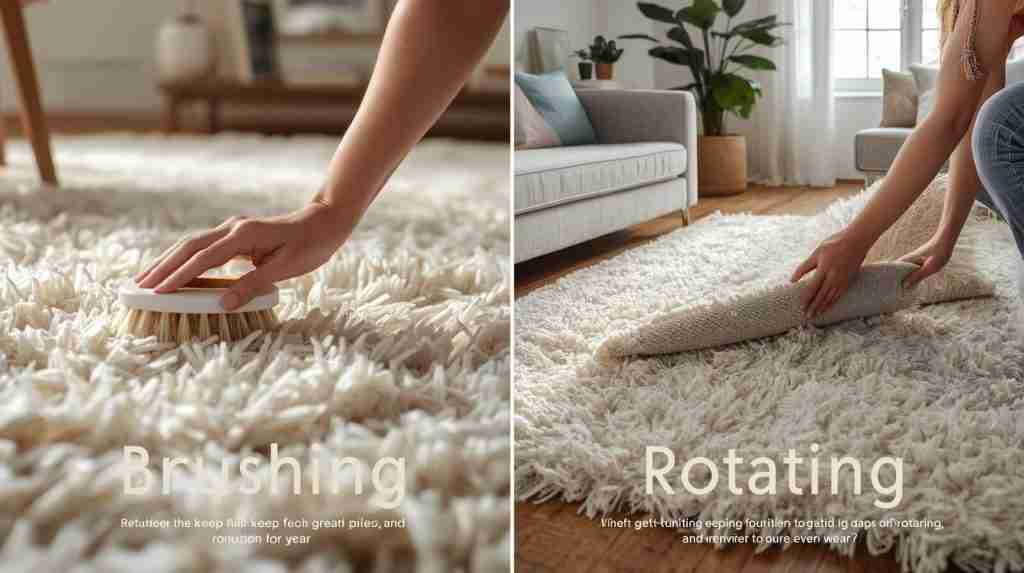
After vacuuming, a gentle fluff with your hand or a soft-bristled brush helps the pile look fresh and even.
2. Spot Cleaning: Acting Fast on Spills
The golden rule for wool: blot, never rub. Rubbing pushes a spill deeper into the fibers and can spread the stain outward, while blotting lifts the liquid up and out.
Immediate steps for a fresh spill:
- Blot excess liquid immediately with a clean, dry, light-coloured cloth — press down firmly and lift, repeating with a clean section of the cloth as needed. Colored cloths can occasionally transfer dye onto wet wool, so lighter or white cloths are the safer choice.
- For solids (food, mud), gently scoop up the excess with a spoon rather than scraping, which can push material deeper into the pile.
- Work from the outer edge of the spill inward, to avoid spreading it further.
Cleaning the area:
- Mix a small amount of wool-safe detergent with cool water — a wool-specific detergent is worth having on hand, since regular household cleaners can be too harsh for wool fibers.
- Test the solution on a hidden corner of the rug first (a spot normally covered by furniture), and wait several minutes to make sure there’s no colour bleeding.
- Dampen a clean cloth with the solution — it should be barely moist, not soaking — and blot gently from the outer edge of the stain toward the center.
- Once the stain has lifted, blot again with a cloth dampened in plain cool water to rinse away any detergent residue, which can otherwise attract dirt over time.
- Blot with a dry towel to absorb remaining moisture, then let the area air dry fully — elevating the rug slightly, or using a fan nearby, helps it dry faster and more evenly.
A few important don’ts:
- Avoid hot water on protein-based stains (blood, dairy, egg) — heat can set these stains rather than lift them.
- Never use bleach, ammonia, or strong oxidizing cleaners on wool — they can damage the fiber’s protein structure.
- Avoid soaking the rug or using excessive water, since this is what risks weakening the glued backing underneath.
For stubborn or unfamiliar stains, when in doubt, a smaller and more cautious cleaning attempt is safer than an aggressive one — you can always repeat gentle blotting, but you can’t undo damage from a cleaner that was too harsh.
3. Deep Cleaning: Refreshing the Whole Rug
Even with regular vacuuming, a hand-tufted wool rug benefits from a deeper clean roughly once a year, or sooner if it sees heavy use, has pets in the home, or starts holding onto odours.
Dry cleaning powder is generally the gentlest deep-cleaning method for hand-tufted rugs, since it avoids introducing moisture that could stress the glued backing:
- Vacuum thoroughly first to remove surface dirt.
- Sprinkle a wool-safe dry cleaning powder evenly over the rug, following the product’s recommended amount for your rug’s size.
- Work it gently into the pile using a soft brush, focusing extra attention on higher-traffic areas.
- Let the powder sit for the time recommended on the product (usually 30–60 minutes) to absorb oils and odours.
- Vacuum thoroughly to remove all the powder, going over the area multiple times to make sure none is left behind.
Low-moisture steam or extraction cleaning is a more involved option, and while it can be done at home with the right equipment, it’s easy to over-wet a rug this way if you’re not experienced with it — which is one of the more common ways hand-tufted rugs get damaged by well-intentioned home cleaning. If you’re not confident doing this yourself, it’s one of the better reasons to bring in a professional instead (more on that below).
4. When to Call a Professional
Some situations are genuinely better handled by a professional rug cleaner rather than attempted at home:
- Large rugs that are difficult to maneuver or dry evenly at home
- Antique, heirloom, or particularly high-value pieces
- Set-in or old stains that haven’t responded to spot cleaning
- Any visible damage to the glued backing or pile lifting
A professional rug cleaner experienced specifically with hand-tufted or hand-made rugs (not just standard wall-to-wall carpet cleaning) will typically use gentler extraction methods, controlled drying, and proper pile grooming afterward. Pricing for professional rug cleaning varies significantly based on rug size, condition, and the provider — it’s worth getting a quote directly from a local rug care specialist rather than assuming a fixed rate, since this varies a lot market to market.
5. Preventive Care: Reducing How Much Cleaning You Need
A little prevention goes a long way toward keeping a hand-tufted rug looking good with less ongoing effort.
Everyday habits:
- A no-shoes policy in the home, or at least in the room where the rug lives, significantly cuts down on tracked-in dirt.
- An entry mat just outside the room helps catch debris before it reaches the rug at all.
- Felt pads under furniture legs prevent crushing and indentation in the pile.
Longer-term care:
- Rotate the rug periodically (every several months) if it’s in a sunlit or high-traffic area, to even out wear and fading.
- Keep the rug out of prolonged direct sunlight where possible, since UV exposure can fade wool over time.
- A non-slip rug pad underneath not only prevents slipping but also reduces friction and wear on the rug’s backing from foot traffic.
Seasonal considerations:
- If you’re storing a rug for a season (moving, renovation, etc.), make sure it’s completely clean and fully dry first, then roll it (pile facing out) and store it in a breathable fabric bag rather than plastic, which can trap moisture and lead to mildew.
- In winter, road salt tracked in on shoes is a common culprit for rug damage — vacuum more frequently during salt season, and blot any visible salt residue with a lightly dampened cloth before it has a chance to grind into the fibers.
Common Mistakes That Shorten a Rug’s Lifespan
A few habits are worth avoiding even if they seem harmless in the moment:
- Using a household all-purpose cleaner instead of a wool-safe detergent. Many general cleaners are formulated for synthetic fibers and can be too alkaline or harsh for wool, gradually damaging fibers with repeated use even if no single use causes visible harm.
- Letting stains sit “until later.” The longer a spill sits, the more it penetrates the fibers and, eventually, the backing itself — same-day treatment makes a real difference in whether a stain lifts cleanly.
- Scrubbing instead of blotting. It’s an intuitive instinct when something spills, but scrubbing pushes the stain deeper and can damage the pile’s texture in the process.
- Skipping the underside. It’s easy to forget the back of the rug entirely, but embedded dust there works its way back up into the pile over time if it’s never addressed.
- Placing a rug in a high-sun spot without rotation. Sun fading happens gradually enough that it’s easy not to notice until the colour difference between a covered and uncovered section becomes obvious.
- Over-wetting during home cleaning attempts. This is the single most common cause of glue-backing damage in hand-tufted rugs — when in doubt, use less water and more patience.
What to Expect as Your Rug Ages
Even with excellent care, a hand-tufted wool rug will show some natural changes over time, and it’s worth knowing what’s normal versus what signals a real problem.
Normal, expected changes:
- Slight flattening of the pile in high-traffic paths, which often bounces back somewhat after vacuuming or fluffing
- Gradual, even softening of colour vibrancy over years, especially in sun-exposed areas
- Minor shedding in the first few weeks after a rug is made or purchased, which is common with new tufted pieces as loose fibers work their way out
Signs worth addressing sooner rather than later:
- Visible lifting or separation of the pile from the backing, which usually indicates the glue has been compromised somewhere
- Persistent odour that doesn’t respond to normal cleaning, which can indicate moisture got trapped in the backing at some point
- Noticeable bald patches, often caused by a beater-bar vacuum or a pet consistently scratching at one spot
Catching these early and addressing them (professional repair for backing issues, targeted deep cleaning for odour) tends to be far easier than waiting until the problem has spread further across the rug.
Can I put a hand-tufted wool rug in the washing machine?
No — the glued backing construction of a hand-tufted rug isn’t designed to withstand a washing machine’s water and agitation. Spot cleaning and professional cleaning are the appropriate methods instead.
How often should I vacuum a wool rug?
Two to three times a week in high-traffic areas, and once or twice a week in lower-traffic spaces, with the beater bar turned off to protect the pile.
What’s the best way to remove a fresh stain?
Blot (never rub) immediately with a clean, light-coloured cloth, then follow up with a wool-safe detergent solution, testing on a hidden area first.
Made a Rug at ZuoZuo Studio?
If you tufted a piece with us and have specific questions about caring for it, we’re happy to help — proper care will keep your rug looking great for years to come.
Learn more about our rug tufting workshops
📍 1315 Lawrence Ave E, Unit 406, North York, ON M3A 3R3 📞 226-348-4177 🕐 Thursday to Sunday, 12pm–8pm