Carpet Making in Toronto: Your Guide to Crafting Custom Rugs in 2025
Picture yourself in a cozy Toronto studio, the hum of a tufting gun in your hands, yarn piling into a plush design that’s all yours. It’s not just a rug—it’s a piece of you, a story woven into every loop. In 2025, carpet making, especially tufting, has become Toronto’s hottest creative outlet, transforming beginners into artisans in just a few hours. As someone who’s spent years teaching tufting classes across the GTA, from bustling Leslieville to vibrant North York, I’ve seen the magic firsthand: couples crafting matching mats, friends laughing over tangled yarn, and solo makers finding calm in the rhythm. Toronto’s craft scene is booming, with over 500 workshops citywide, and carpet making stands out for its accessibility, creativity, and pure joy.
This guide dives into why tufting is taking over, the history behind Toronto’s carpet legacy, the best studios to visit, and how you can start crafting your own rug. Whether you’re dreaming of a shaggy bath mat for your Parkdale apartment or a bold wall hanging for your Scarborough condo, let’s unravel the art of carpet making, Toronto-style.
Toronto’s Carpet Making Roots: A Thread Through Time
Carpet making in Toronto isn’t new—it’s woven into the city’s industrial past. Back in 1891, the Toronto Carpet Manufacturing Company opened on Jarvis Street, a small operation that grew into a powerhouse by the early 1900s. By 1899, they’d moved to a massive factory in what’s now Liberty Village, a sprawling brick complex that pumped out intricate chenille and Axminster carpets. At its peak during World War I, over 1,000 workers—many women breaking barriers—wove patterns that warmed Canadian homes. These weren’t just rugs; they were symbols of Toronto’s grit and craftsmanship.
By the 1970s, global competition slowed the factory’s looms, and it downsized, selling off its iconic buildings. Today, that same Liberty Village factory is a creative hub, home to artists, designers, and, fittingly, modern craft studios. This shift mirrors carpet making’s evolution: from mass production to personal expression. Enter tufting, a technique rooted in 19th-century factories but reborn in the 2010s via social media’s viral pull. In Toronto, it’s exploded—our multicultural vibe (over 200 ethnic groups) inspires designs from Persian motifs to Indigenous patterns, while long winters make indoor crafting a seasonal must. Tufting’s approachable, hands-on nature has made it a favorite, turning yarn into art that’s both functional and deeply personal.
What Is Carpet Making? The Art and Soul of Tufting
If you’re picturing ancient looms in a far-off market, let’s update that image. Carpet making today, especially in Toronto, is all about tufting—a fast, fun way to create plush rugs, mats, or tapestries. At its heart, it’s looping yarn through a backing to form a pile, either by hand-weaving for traditionalists or using an electric tufting gun for modern makers. Tufting’s the star here: you punch yarn through stretched cloth, building designs row by row, then glue and trim for a finished look.
Why’s tufting so addictive? It’s beginner-friendly yet endlessly creative. A gun—a handheld tool like a sewing machine on steroids—makes it quick, letting you craft a rug in 1–4 hours. You don’t need years of skill; studios supply everything, from yarn to frames. Yarn choices range from budget-friendly acrylics to luxe wool or eco-conscious recycled cotton, reflecting Toronto’s green ethos. Designs? Limitless. Sketch a CN Tower silhouette, a floral nod to High Park, or a chaotic abstract inspired by Kensington Market. The process is tactile heaven: the gun’s rhythmic buzz, yarn’s softness, and the thrill of seeing your pattern emerge.
Safety’s simple—gloves for grip, earplugs for noise—but the payoff’s huge. Mistakes, like uneven loops, become “character.” Finish with latex glue to lock it in, steam for fluff, and your rug’s ready to withstand Toronto’s muddy boots. It’s not just crafting; it’s a mini-revolution, turning “I can’t” into “I just did.”
Why Tufting’s Taken Over Toronto’s Creative Scene
Tufting’s rise isn’t random—it’s a perfect fit for Toronto’s fast-paced, diverse vibe. The sensory experience is a big draw: the gun’s steady thunk-thunk is like ASMR, calming nerves while yarn’s texture grounds you. Crafting studies show it can cut anxiety by 25%, a godsend in a city where stress runs high. For busy Torontonians—think downtown commuters or Etobicoke entrepreneurs—a 2-hour workshop is a reset button, leaving you with a rug worth bragging about.
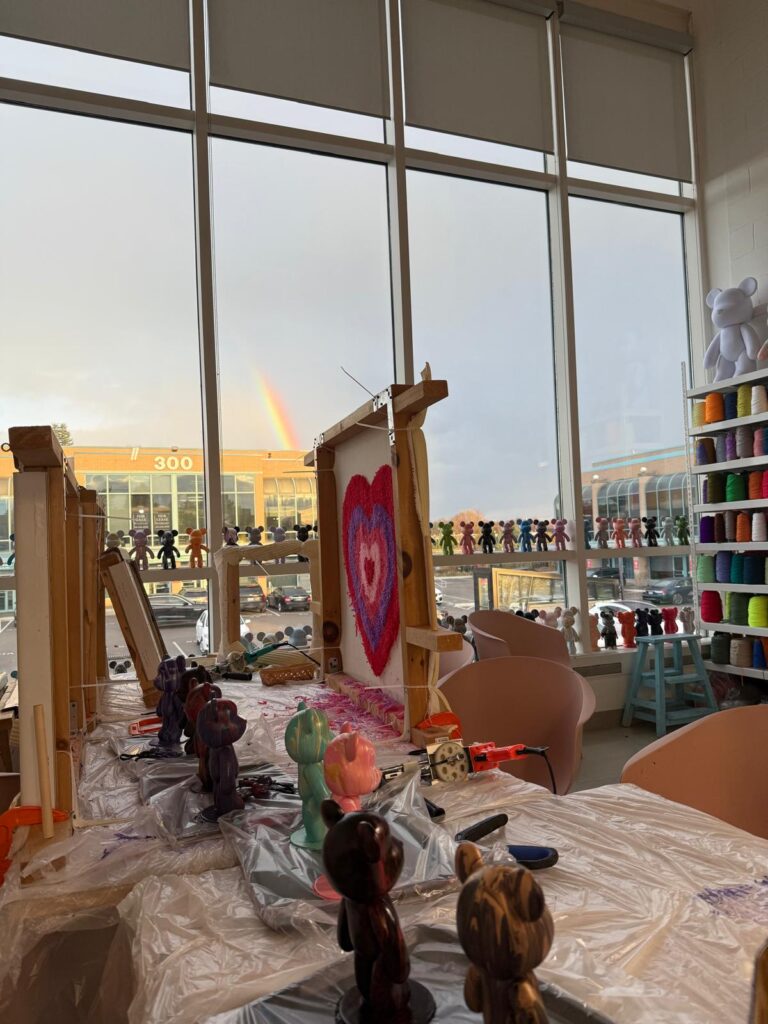
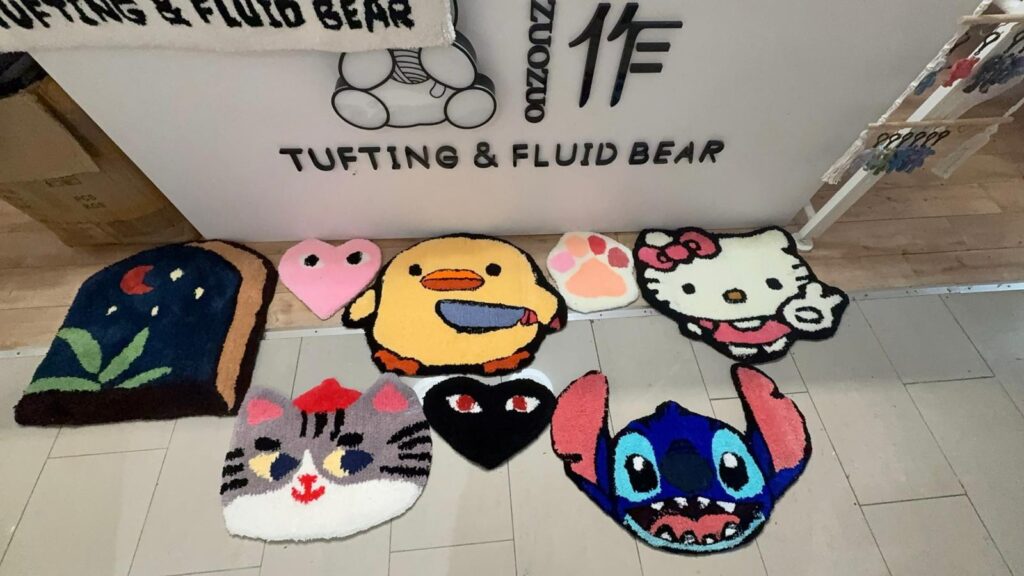
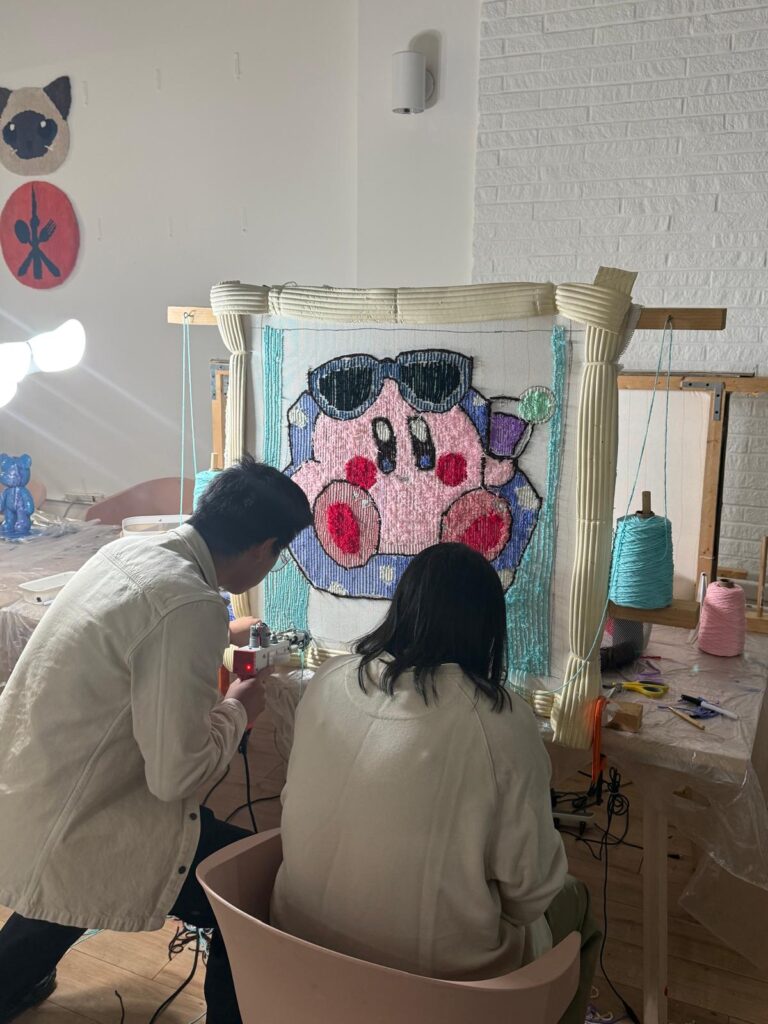
Creativity’s the real hook. Unlike rigid kits, tufting lets you freestyle: geometric grids, pet portraits, or abstract swirls. It’s social, too—perfect for date nights, where couples co-create, or team builds, where colleagues bond over yarn disasters. I’ve seen shy strangers become fast friends over a shared frame, laughing as they untangle knots. Families love it (kids 8+ with supervision), teaching patience and play.
Sustainability seals it. Toronto’s eco-conscious crowd gravitates to studios using recycled yarns from local mills, cutting waste while nodding to our textile heritage. Economically, it’s a steal: a $100 session yields a rug retailing for $400+. Physically, it’s a light workout—arm strength from the gun, focus from tracing. For neurodiverse folks, the repetition soothes; many studios offer sensory-friendly sessions. In a city of global influences, tufting weaves in everything from Moroccan zellige to Scandinavian minimalism, making it as inclusive as Toronto itself.
Toronto’s Top Carpet Making Studios: Where to Start Tufting
Toronto’s tufting scene is as vibrant as its neighborhoods, with studios offering unique spins on carpet making. Based on my own sessions and 2025 reviews from local platforms, here are the best places to get your tuft on.
ZuoZuo Studio in North York is a crowd favorite, blending tufting with fluid art since 2022. Their workshops ($110) range from solo 50x50cm mats (1.5 hours) to collaborative 100x120cm rugs for two. Instructors, trained in fine arts, guide you through yarn tension and eco-friendly choices like Ontario-sourced wool. Fans call it “therapy with a side of decor,” praising the clear tutorials. New for 2025: Toronto-themed patterns like skyline stencils.
Sin Vergüenza in Leslieville, an LGBTQ+ owned gem, offers alcohol-free tufting with a community vibe. Their $80+ two-session classes cover tufting and carving, perfect for detailed designs. Groups of up to 12 thrive here, fueled by non-alcoholic drinks and cantina snacks. Reviewers love the “safe, creative space” and hands-on help. In 2025, they’re adding custom shaving services for polished piles.
Fuzzy Lab near Yonge and Eglinton boasts Toronto’s largest tufting space, hosting 35+ crafters at once. For $65, you’ll tackle a 70x70cm rug with high-tech guns for precision. Its subway-adjacent location and parking make it a breeze, and the customer rug gallery sparks ideas. Fans say it’s “addictively fun.” Look out for 2025’s pottery-tufting combo days.
Emotuft, with spots in Dundas West and North York, brings emotional flair to tufting. Their $50–$100 workshops create rugs, bags, or mirrors, with themes like “Happy Chaos” encouraging expressive designs. Thousands of participants praise the “joyful process.” In 2025, expect downtown pop-ups near art galleries for creative crossovers.
Chillax Studio on Tecumseth Street keeps it personal, with $70+ sessions including aftercare tips for rugs that last decades. Their “set-up, clean-up” service lets you focus on crafting. Reviewers call it “pure magic” for groups. New for 2025: Mosaic-lamp tufting fusions.
For traditional vibes, Loom Studio, tied to the Toronto Weaving School, offers $60–$200 weaving classes using recycled linens for rag rugs. Small groups of four ensure close guidance, and fans call it “serene skill-building.” In 2025, they’re adding double-weave intensives.
One Day Off pops up across the GTA with $50+ kits for at-home or in-studio tufting, emphasizing “your unique journey.” Their all-inclusive approach earns high marks. Finally, Sukoon Space in Bathurst offers Persian kilim knotting ($75), blending storytelling with craft for a cultural deep dive.
These studios aren’t just places to tuft—they’re where Toronto’s creative spirit comes alive, one yarn loop at a time.
How a Carpet Making Workshop Unfolds
Ready to try it? A typical Toronto tufting workshop is a 2–4 hour adventure, blending structure with freedom. Here’s how it goes, based on my years guiding newbies.
Step 1: Dream It Up. Walk in, grab a coffee, and sketch your design. Use stencils for clean lines or freehand for bold vibes—think Toronto landmarks or abstract swirls. Studios provide stretched monk’s cloth and markers to trace your vision.
Step 2: Pick Your Palette. Choose from yarn walls bursting with colors—acrylic for pops, wool for depth, or recycled blends for eco points. Load the tufting gun, adjust its speed, and test on scrap cloth. Instructors demo to prevent jams.
Step 3: Tuft Away. This is the fun part. Hold the gun like a game controller, punching yarn through the cloth. Start with outlines, then fill in, moving at a steady 1–2 cm per second. The zip-zip rhythm is hypnotic. Tangled? Flip and fix. Pairs split sections for teamwork.
Step 4: Lock It In. Apply latex glue to secure loops, ensuring your rug survives Toronto’s foot traffic. Studios often handle drying (24 hours), but you’ll learn clamping for home projects.
Step 5: Trim and Shine. Cut loops for a sleek pile or shear for uniformity. Brush, steam, and admire your creation. Most studios add anti-slip backings for function.
Mistakes happen—uneven loops or color bleeds—but instructors turn them into “texture.” Wear gloves for grip, earplugs for noise. Post-workshop, clean with mild soap and air-dry to keep it fresh.
Why Tufting’s Worth Your Time
Carpet making isn’t just about the rug—it’s a full-body, full-heart experience. Mentally, it’s a stress-buster, cutting anxiety through repetitive focus. Socially, it’s a connector—whether you’re tufting solo or with friends, you’ll share laughs and stories. For families, it’s bonding; for teams, it’s collaboration.
Skill-wise, you’re learning a craft with endless applications—rugs, bags, wall art. It’s budget-smart: a $100 workshop creates a $400 retail piece. Eco-wise, recycled yarns align with Toronto’s green goals. Physically, it’s a light workout, strengthening hands and focus, especially for neurodiverse crafters who thrive in structured settings.
Culturally, tufting weaves in Toronto’s diversity—Persian knots, Indigenous motifs, or modern abstracts. It’s a lifelong skill; my first rug, a quirky heart, sparked a collection. Yours could, too.
Tips to Tuft Like a Toronto Pro
Start small—a 50x50cm mat builds confidence. Layer colors strategically: light base, dark accents. Toronto’s humidity can frizz yarn, so work in dry spaces or mist lightly. Budget tip: Buy kits ($40–$60) for home practice. Join local craft groups for yarn swaps or free demos at fiber festivals.
Avoid over-tufting edges—outline first. Fraying? Double-glue. For 2025, try glow-in-the-dark yarns for UV-party rugs or cultural patterns inspired by Toronto’s Textile Museum. Clean gently, rotate seasonally, and your rug’s a legacy.
Your Toronto Tufting Journey Starts Now
Carpet making in Toronto is more than a craft—it’s a celebration of creativity, community, and calm. From Liberty Village’s historic roots to North York’s buzzing studios, tufting invites you to weave your story into every loop. As someone who’s tufted through Toronto’s chaos and found joy in the pile, I’m here to say: grab a gun, pick your yarn, and create something that’s yours. Your rug’s waiting to warm your home—and your heart.