
Quick answer: The best icebreakers get people talking without making them perform — the strongest options for 2026 are hands-on creative activities, structured “two truths” style games, small-group challenges, human bingo, and would-you-rather prompts. Which one works best depends entirely on your group size, how well people already know each other, and how much time you actually have.
Most icebreakers fail for the same reason: they ask people to be vulnerable or performative before there’s any trust in the room. A good icebreaker does the opposite — it gives people a low-stakes reason to talk, and lets connection happen as a side effect rather than the main event.
Before the list, it’s worth understanding what actually makes an icebreaker work, since most of the ones people default to don’t:
They ask for too much too soon. “Share something nobody knows about you” in front of a room of strangers is a big ask on minute one. People either shut down or give a rehearsed, safe answer that doesn’t actually reveal anything.
They create a performance dynamic. Anything that puts one person on the spot in front of a group — even something as simple as introducing yourself with a “fun fact” — turns into a mini-performance. Extroverts handle it fine. Everyone else tenses up.
They’re disposable. A good icebreaker gives people something to reference later — an inside joke, a shared laugh, a callback. A bad one is forgotten within the hour because there was nothing memorable attached to it, just an exercise you got through.
They don’t match the group. An icebreaker built for 8 people falls apart with 40. One built for strangers meeting for the first time feels condescending for a team that already knows each other.
Keep those failure points in mind — the icebreakers below are ranked with them specifically in mind.
The strongest icebreaker format going into 2026 isn’t a game at all — it’s giving the group something to actually make together. When people’s hands are busy with a real task, the pressure to “perform” an introduction disappears entirely. Conversation happens because people want to talk, not because they’re being prompted to.
This is why creative workshops — rug tufting, fluid bear painting, pearl jewelry making — have become a popular alternative to traditional icebreaker games for corporate teams, new-hire onboarding, and conference breakout sessions. There’s no skill hierarchy (nobody’s done it before), it scales from small teams to large groups depending on the format, and unlike a five-minute icebreaker game, the activity itself carries the entire session — people leave with something made, not just a warmed-up room.
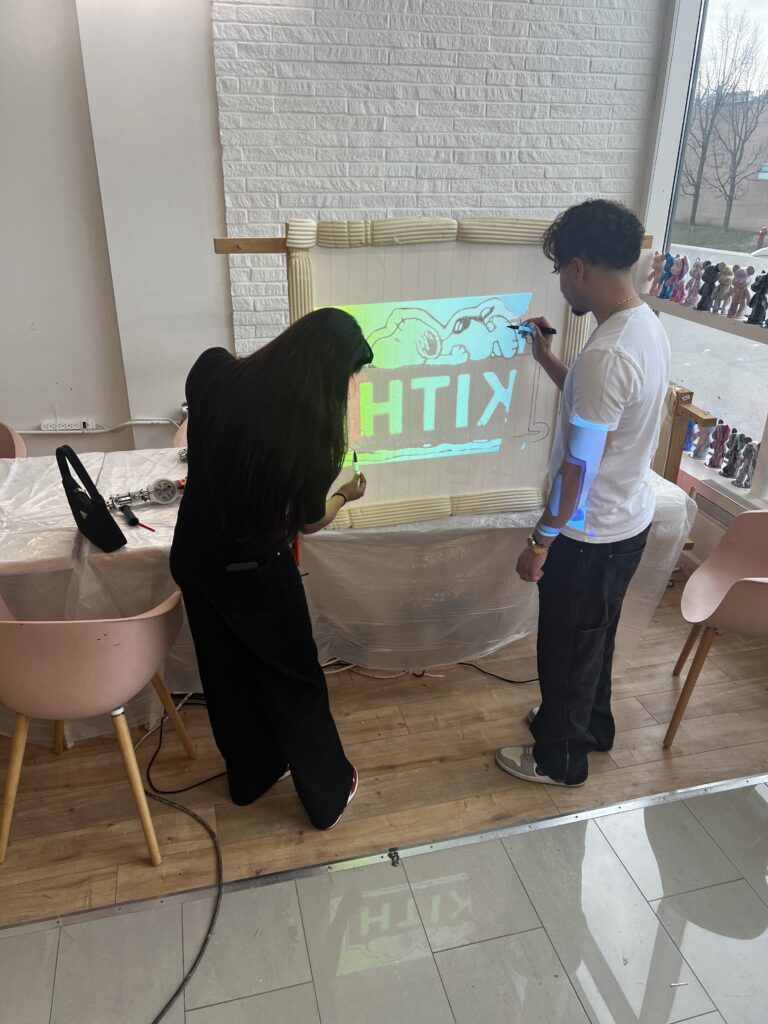

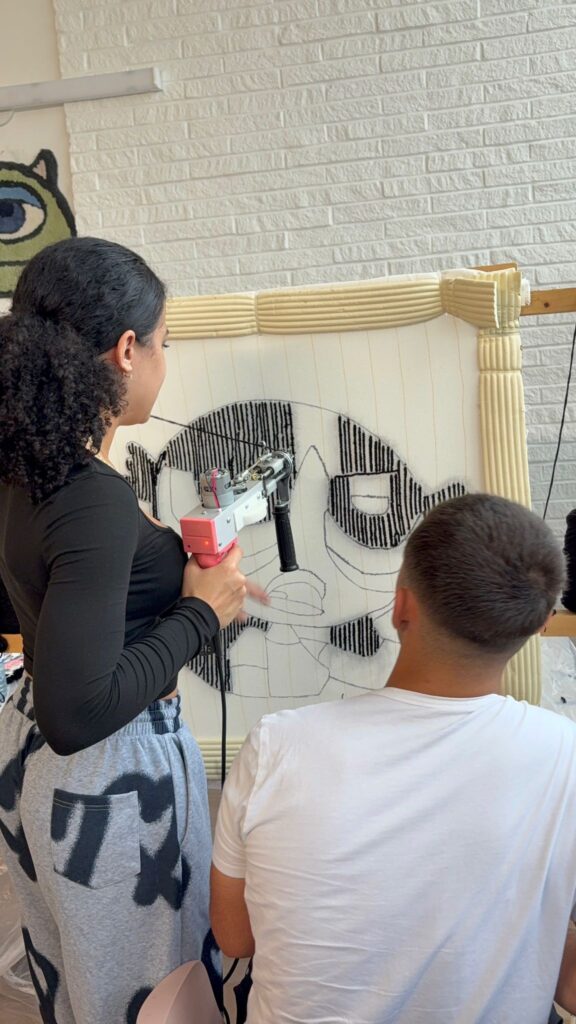
Best for: Groups where you want more than five minutes of surface-level warmup — new team onboarding, full offsites, or any event where “breaking the ice” is really the whole point of getting together.
👉 See how this works for corporate groups → zuozuostudio.ca/corporate-team-building-in-toronto
The classic for a reason, but most groups run it badly. The version that actually works: give people a minute to write their three statements down first (not think on the spot), and have the group guess in pairs rather than one at a time in front of everyone. This removes the performance pressure that makes the standard version awkward, while keeping the genuine curiosity that makes it fun.
Best for: Small-to-medium groups (6–20) who are meeting for the first time and have 10–15 minutes to spend.
Splitting a larger group into teams of 3–5 for a quick, low-stakes challenge — a short trivia round, a simple build-something-with-limited-materials task, a quick group puzzle — works well because it removes the whole-room spotlight entirely. People only have to engage with a handful of others, which is far less intimidating than a full-group activity, and a shared small win (or a shared, funny failure) creates fast rapport.
Best for: Larger groups (20+) where a whole-room activity would leave most people watching rather than participating.
Each person gets a bingo card with prompts like “has traveled to 3+ countries” or “can play an instrument” instead of numbers, and has to mingle to find someone who matches each square. It forces movement and short one-on-one conversations without requiring anyone to reveal anything they haven’t chosen to bring up themselves.
Best for: Conference-style or large mixed-group settings where people don’t know each other at all and need a structured reason to start talking to strangers.
A simple prompt game, but the version that works is themed and building toward something — not just random silly questions, but a sequence that gradually gets people revealing genuine preferences and small opinions. Works best in a circle or small group format where everyone answers each round, rather than as background noise during a mingling event.
Best for: Short warmups (5-10 minutes) at the start of a meeting or workshop, rather than as a standalone event.
If your team has been through several org changes, brought on a wave of new hires, or genuinely hasn’t connected as a group in a while, a 5-minute game at the start of a meeting isn’t going to do the real work. That’s usually when a longer, hands-on session — a proper offsite built around a shared activity rather than a quick warmup — actually moves the needle. The same principle that makes a good icebreaker work (busy hands, low pressure, genuine conversation as a side effect) just needs more time to do its job.
👉 See what that looks like for a full team event → zuozuostudio.ca/corporate-team-building-in-toronto
One that doesn’t ask people to perform or reveal something too personal too soon — the best icebreakers give people a low-stakes reason to talk and let connection happen as a byproduct, not the main event.
Human bingo or small-group challenges work best at scale, since they avoid putting the whole room’s attention on one person at a time.
Are hands-on activities better icebreakers than games? For anything beyond a quick 5-minute warmup, yes — a shared creative activity removes the performance pressure entirely and gives people something to actually talk about while they work, rather than a scripted prompt.
How long should an icebreaker take? Quick warmups (would you rather, two truths and a lie) work in 5-15 minutes. If the actual goal is building real team connection rather than just starting a meeting, a longer hands-on session is worth the extra time.
What’s a good icebreaker for new hires specifically? A longer, hands-on shared activity tends to work better than a quick game for onboarding specifically, since new hires benefit more from an extended, low-pressure way to get to know existing team members than a five-minute warmup.
👉 See corporate team building options → zuozuostudio.ca/corporate-team-building-in-toronto 👉 Book Rug Tufting → zuozuostudio.ca/rug-tufting-toronto 👉 Book Fluid Bear Painting → zuozuostudio.ca/fluid-bear
📍 1315 Lawrence Ave E, Unit 406, North York, ON M3A 3R3 📞 226-348-4177 🕐 Thursday–Sunday, 12pm–8pm