- 226-348-4177
- [email protected]
- 1315 Lawrence Ave E,unit 406, M3A 3R3, North York, Ontario

If you’re shopping for a rug or considering making your own through a tufting workshop, you’ve probably asked yourself: “Are hand tufted rugs actually good quality? Will they last, or am I wasting my money?”
It’s a fair question. With hand-tufted rugs priced anywhere from $200 to $2,000+, depending on size and materials, you deserve to know exactly what you’re getting.
After teaching over 1,200 students to tuft rugs at ZuoZuo Studio in Toronto and watching countless rugs hold up (or fall apart) over the past three years, I can give you the honest answer: Hand tufted rugs can be excellent quality and remarkably durable—but only if they’re made correctly with the right materials.
Let me break down everything you need to know about hand-tufted rug quality, how long they actually last, and what separates a rug that survives for 15+ years from one that falls apart after six months.
Before we dive into quality and durability, let’s clarify what “hand tufted” actually means.
A hand tufted rug is created by using a tufting gun to punch yarn through fabric stretched on a frame. Unlike hand-knotted rugs where each individual knot is tied by hand (a process that can take months), hand tufted rugs are made significantly faster—usually in a few hours to a few days depending on size and complexity.
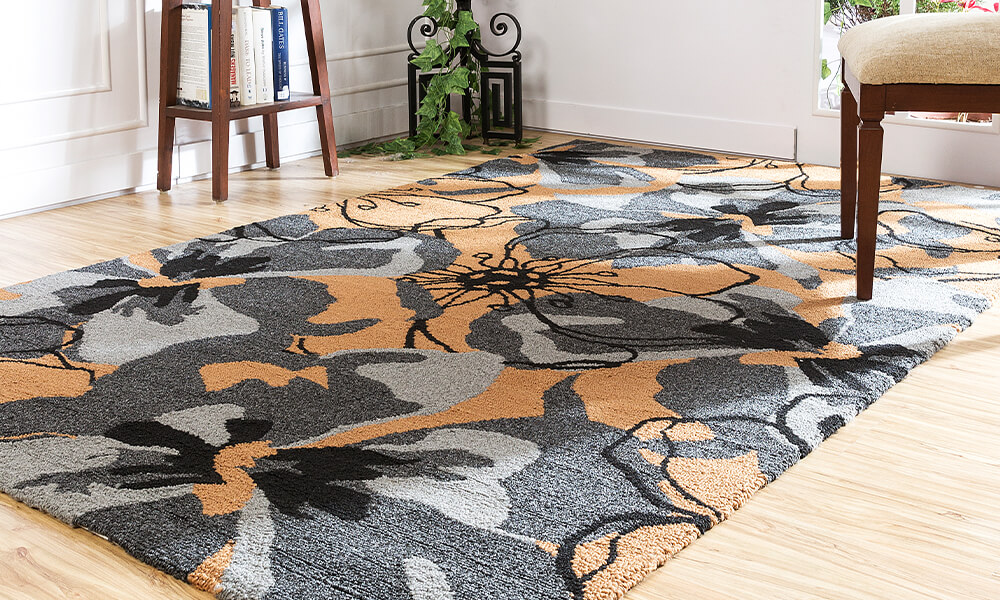
Here’s the basic process:
The entire construction relies on that adhesive backing to hold everything together—which is both the strength and potential weakness of hand tufted rugs.
To understand where hand tufted rugs sit on the quality spectrum, let’s compare all three major rug types:
Construction: Individual knots tied by hand around warp threads on a loom
Durability: 50-200+ years with proper care; heirloom quality
Price: $1,000-$50,000+ depending on materials and origin
Pros: Unmatched durability, true artisan craftsmanship, can last generations, reversible, highly valuable
Cons: Extremely expensive, limited design flexibility, takes months to years to produce
Construction: Yarn punched through fabric with a tufting gun, secured with adhesive backing
Durability: 5-20 years depending on materials and construction quality
Price: $200-$3,000 for custom pieces; $100-$800 for retail
Pros: Much more affordable than hand-knotted, faster production, wide design flexibility, soft and comfortable
Cons: Relies on adhesive (which can fail), not reversible, shorter lifespan than hand-knotted, quality varies widely
Construction: Fully automated power looms
Durability: 3-10 years typically
Price: $50-$500
Pros: Most affordable, consistent production, readily available
Cons: Mass-produced, less comfortable, limited customization, shorter lifespan, lower resale value
The verdict: Hand tufted rugs occupy the middle ground—significantly better quality than machine made, but not quite matching the legendary durability of hand-knotted pieces. For most people, they offer the best balance of quality, affordability, and design flexibility.
So are hand tufted rugs durable? The answer is: It depends entirely on four critical factors.
The fiber used to tuft your rug is the single biggest determinant of durability.
100% Wool (Best Option)
New Zealand wool is considered the gold standard for hand tufted rugs. High-quality wool rugs can last 10-20 years in residential settings with proper care because wool:
Wool Blends (Good Option)
Wool blended with cotton, viscose, or acrylic can still deliver solid durability—typically 7-15 years—especially if wool comprises 60%+ of the blend. These blends often cost less while maintaining decent quality.
Acrylic/Synthetic (Budget Option)
Pure acrylic or polypropylene tufted rugs last 5-10 years typically. While they resist stains and fading better than natural fibers, they:
Cotton (Variable Quality)
Cotton tufted rugs are soft but less resilient than wool—expect 5-8 years of life. They’re prone to crushing in high-traffic areas.
Viscose/Rayon (Least Durable)
Despite their silk-like appearance, viscose rugs are the least durable natural fiber option—lasting just 3-7 years even with gentle use. They stain easily, shed continuously, and can’t handle moisture.
Bottom line: If you want a hand tufted rug that lasts 10+ years, invest in 100% wool or a high-percentage wool blend.
Density refers to how many tufts are punched per square meter. Higher density = more durable rug.
High Density (100,000+ tufts per m²)
Medium Density (50,000-100,000 tufts per m²)
Low Density (Under 50,000 tufts per m²)
Pile height also matters. Rugs with 7-10mm pile height or greater handle foot traffic better because the fibers have more “give” and don’t show compression as quickly.
Recommendation: For a durable hand tufted rug, look for medium-to-high density (50,000-100,000+ tufts per m²) with at least 7-10mm pile height.
This is where many hand tufted rugs fail.
The adhesive that holds your yarn in place is critical. Industrial-grade carpet adhesive (latex-based) creates a strong, flexible bond that lasts for years. Cheap craft glue or thinned adhesive leads to:
At ZuoZuo Studio, we use the same industrial adhesive that commercial carpet installers use—it costs $45 per gallon versus $12 for craft adhesive, but the durability difference is enormous.
Backing fabric also matters. Quality hand tufted rugs use:
Red flags for poor backing:
Even with perfect materials, poor construction ruins durability.
Professional finishing includes:
DIY finishing mistakes that reduce lifespan:
This is why rugs from experienced studios last longer than first-time DIY projects—the finishing process makes or breaks long-term durability.
Based on industry data and our own experience with 1,200+ rugs, here’s the realistic lifespan for medium-to-high quality hand tufted wool rugs in different settings:
Expected lifespan: 10-20 years
Bedrooms see minimal foot traffic and no food/drink spills. A quality wool hand tufted rug in this environment can easily last 15+ years with basic care. We’ve seen rugs from 2010 that still look great in bedrooms.
Expected lifespan: 7-15 years
Living rooms have regular foot traffic and occasional spills. A well-made hand tufted rug handles this well, showing normal aging but remaining structurally sound for a decade or more.
Expected lifespan: 5-10 years
Heavy foot traffic, dirt from shoes, and constant abrasion wear rugs down faster. Even the best hand tufted wool rug will show significant wear after 5-7 years in an entryway, though it will still be usable.
Expected lifespan: 3-7 years
Office lobbies, retail spaces, and restaurants put extreme stress on rugs. Hand tufted rugs can work in these settings but need replacing more frequently than commercial-grade alternatives.
Important note: These estimates assume:
Lower-quality materials, construction, or maintenance will significantly reduce these timelines.
Let’s address the elephant in the room: Hand tufted rugs don’t last as long as hand-knotted rugs. Here’s why:
Hand-knotted rugs last 50-200+ years because:
Hand-tufted rugs last 5-20 years because:
The price reflects this reality:
A $6,000 hand-knotted rug lasting 60 years costs $100/year. A $1,200 hand-tufted rug lasting 12 years costs $100/year.
So which should you buy?
Choose hand-knotted if you want:
Choose hand-tufted if you want:
Most Toronto homeowners find hand-tufted rugs offer the best value—excellent quality without the premium price tag.
After three years of making and maintaining tufted rugs, I’ve seen every durability issue imaginable. Here are the most common problems and how to prevent them:
Cause: Insufficient or low-quality adhesive
Signs: Individual yarn strands pulling loose, especially around edges
Prevention:
Cause: Poor adhesive bond between rug and backing fabric
Signs: Backing lifts away from rug body, corners curl
Prevention:
Cause: Low pile density or inappropriate placement
Signs: Flattened areas where people walk, backing visible through pile
Prevention:
Cause: Using materials that aren’t stain-resistant
Signs: Spills that won’t come out, yellowing over time
Prevention:
Cause: Low-quality yarn or insufficient adhesive penetration
Signs: Constant yarn fibers on floor, vacuum bag fills quickly
Prevention:
Cause: Using cheap latex adhesive or insufficient drying time
Signs: Strong chemical smell that doesn’t dissipate
Prevention:
Want to maximize the lifespan of your hand tufted rug? Follow these proven maintenance practices:
Vacuum properly
Shake out small rugs
Rotate your rug
Check for loose yarn
Deep clean (2-3 times per year)
Protect from pests
Use rug pads
Avoid moisture-prone areas
Protect from direct sunlight
Never machine wash – The agitation destroys adhesive and backing
Don’t use steam cleaners – Excessive moisture breaks down glue
Avoid harsh chemicals – Use pH-neutral cleaners only
Don’t place heavy furniture – Causes permanent crushing (use furniture coasters)
Never fold for storage – Creates permanent creases; roll instead
Follow these guidelines and your quality hand tufted wool rug can easily hit that 15-20 year mark.
There’s a significant quality gap between DIY home-tufted rugs and professionally finished studio rugs.
Typical lifespan: 2-7 years
Common quality issues:
Who it works for: Decorative wall pieces, learning projects, low-traffic areas
Typical lifespan: 7-20 years
Quality advantages:
Who it works for: Floor rugs in any room, long-term investment pieces, gifts
The reality: Your first DIY rug probably won’t last 15 years unless you have professional finishing skills or access to commercial equipment. Studio rugs cost more upfront but deliver significantly better durability.
At ZuoZuo Studio, we’ve seen countless students who made rugs at home without proper finishing bring them in for “repair”—but once adhesive fails or backing peels, there’s often no fixing it. That’s why we include professional finishing in every workshop package.
After everything we’ve covered, let’s answer the original question: Are hand tufted rugs good quality and durable?
Yes—if they meet these criteria:
✅ Made with 100% wool or high-percentage wool blend
✅ Medium to high density (50,000-100,000+ tufts per m²)
✅ Professional finishing with industrial adhesive
✅ Quality backing fabric properly attached
✅ Regular maintenance and appropriate placement
No—if they have these red flags:
❌ Made with cheap acrylic, viscose, or mystery fiber blends
❌ Low density, thin pile
❌ DIY finishing by inexperienced person
❌ Cheap craft glue instead of carpet adhesive
❌ No backing fabric or poorly attached backing
A well-made hand tufted wool rug is absolutely good quality and will serve you beautifully for 10-20 years in residential settings. That’s excellent value when you consider:
Are they as durable as hand-knotted rugs? No. Nothing is.
Are they more durable than machine-made rugs? Absolutely, when properly constructed.
Do they offer the best balance of quality, affordability, and design flexibility? For most people, yes.
If you want a hand tufted rug that actually lasts, don’t compromise on materials or finishing.
At ZuoZuo Studio in North York, every workshop includes:
Our hand tufted rugs from 2022-2023 are still going strong in Toronto homes, holding up beautifully to kids, pets, and daily life.
Workshop Pricing:
Book your workshop at zuozuostudio.ca or visit us at 1315 Lawrence Ave E, North York (10 minutes from Finch Station).
Create a rug you’ll love for the next 15 years—not one that falls apart after six months.